

On 8,244 hectares of land there are 99,585 business establishments. That is 176 per 1,000 inhabitants, the highest figure of the municipalities here after Amsterdam. The largest groups are business services (23.6%) and government, education and healthcare (16.7%). These are organisations that not only want clean ducts, but also paperwork that proves it.
That is why this page is mainly about access, inspection and documentation: how you reach the duct, how you see what is inside and how you deliver a report that a facilities manager, school board or care organisation can work with. The equipment comes from Lamers Reinigingstechniek in Zelhem; the work is done by you or by your cleaning partner.

Compact city, cramped plant rooms: what that means for duct work
In a densely built city you rarely work from a spacious rooftop set up. You come in via a stairwell, a lift or a narrow shaft. That has three consequences:
- Weight and size count. A machine that two people have to carry up a flight of stairs costs time on every project.
- Working space is limited. An extraction unit, hoses and a brushing machine all have to fit into a corridor or a ceiling opening together.
- Occupants are present. In offices, schools and care locations you want to keep dust and noise to a minimum.
So the choice of equipment starts with the location, not with the duct. List your requirements and weigh them up when you duct cleaning equipment for businesses.
How do you reach a duct that has no access panel?
Many existing ducts have too few openings. The Eurovent recommendation on ductwork cleanliness gives a guideline: inspection openings no more than 10 metres apart, or after at most two bends of 45 degrees or more. Openings belong on both sides of dampers, coils, heat recovery, attenuators, filters and fans. For ducts wider than 500 mm, a panel of at least 500 by 400 mm is the guideline.
If those panels are missing, you have two options. You fit resealable inspection doors or small access panels afterwards; Danduct has those in its range. Or you work with a method that needs little access. The air lance with camera for cleaning contractors pulls itself through the duct with air pressure, works from 30 mm and handles tight bends, with 20 metres of hose included.
Making duct cleaning Den Haag verifiable
Government, education and healthcare together account for 16,660 establishments in Den Haag. Organisations like these often have an auditor, insurer or regulator who wants to see what has been done. This is what you record in each situation:
| What you record | Why | Office | School | Care |
|---|---|---|---|---|
| Prior inspection with camera and photos | Baseline, justification for the job | ✓ | ✓ | ✓ |
| Cleanliness after cleaning (surface comparison or vacuum test) | Proving the result | ✓ | ✓ | ✓ |
| Negative pressure and HEPA during the work | No spread into occupied rooms | ✓ | ✓ | ✓ |
| Link to the air management plan | Mandatory part of the operating theatre air handling guideline | ✗ | ✗ | ✓ |
| Separation between cleaner and inspector | Objectivity | optional | optional | ✓ |
The advice to separate cleaning from the hygiene inspection comes from German VDI 6022 practice. It is not a Dutch obligation, but care organisations ask for it more and more often.
Schools: construction dust, CO2 and filters per classroom
Every classroom in primary, secondary and special education must have a CO2 meter (Building Works Living Environment Decree (Bbl) article 3.143). The Frisse Scholen (Fresh Schools) programme uses limits of 1,200, 950 and 800 ppm for class C, B and A, and asks for periodic technical and hygienic maintenance of the climate installation.
One point that is often forgotten: according to RVO (Netherlands Enterprise Agency), air ducts in newly completed schools turn out to be contaminated with construction dust. An inspection at handover is therefore no luxury. With decentralised ventilation, the installer also has to visit every classroom to replace filters, which is a good moment to check the grilles as well. Continue reading under air duct cleaning in schools.
Care locations: inspection every 2 years where there is humidification
Stricter agreements apply in healthcare. The SRI guidelines are the successor to the WIP guidelines for infection prevention. For operating theatres the guideline requires an air management plan covering technical management, maintenance and periodic checks.
Outside the operating theatre, the German VDI 6022 is a widely used benchmark: a hygiene inspection every 2 years for installations with humidification and every 3 years without. The first inspection belongs before commissioning, after a major modification or if an installation has never been inspected. For nursing homes this carries through to the page on ventilation in elderly care.
Choose the brush according to the duct material
Older buildings sometimes have a mix of sheet metal, flexible hose and duct board. The US EPA recommends soft brushes for fibreglass duct board and sheet metal. There are no EPA registered biocides for fibreglass duct board and coatings are not a routine measure.
Danduct supplies soft, standard and more aggressive Tynex brushes from 100 to 600 mm. For small ducts with bends there are more flexible shafts. An explanation per brush type is available under brushes for air ducts for cleaning contractors.
Fictional example: an office tower with one central shaft
A fictional office building of ten storeys has one central extract shaft with a branch on every floor. There is only one access panel, on the top floor.
Working order: first use the camera of the Airnozzle to map how dirty the branches are. Based on that, you fit extra panels where needed. Then you clean floor by floor from top to bottom, with the shaft under negative pressure and the valves covered. The report contains a before and after photo for each floor. That way the facilities manager has one document that can be used for each tenant.
The same logic works for the many mid rise blocks in the city: map first, add access only where the camera shows it is needed, and keep each tenant's section separate in the report. It keeps disruption low and the paperwork clear.
Ventilation duct cleaning Den Haag and the surrounding area
Do you also work outside the city? Rotterdam has 107,710 establishments and more industry: see air duct cleaning in Rotterdam. Haarlem, with 5,739 inhabitants per km2, is almost as compact: see ductwork cleaning for Haarlem businesses.
The full overview is under all cities for air duct cleaning. For a specific job in Den Haag you can duct cleaning advice for cleaning contractors to ask a question or request a quotation.
Air duct cleaning equipment from Lamers at a glance
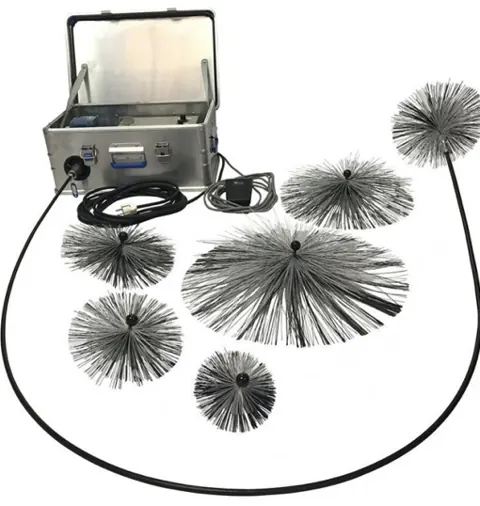 DC4 duct cleaning machineDC4: electric, up to 30 m, ducts from 100 to 600 mm
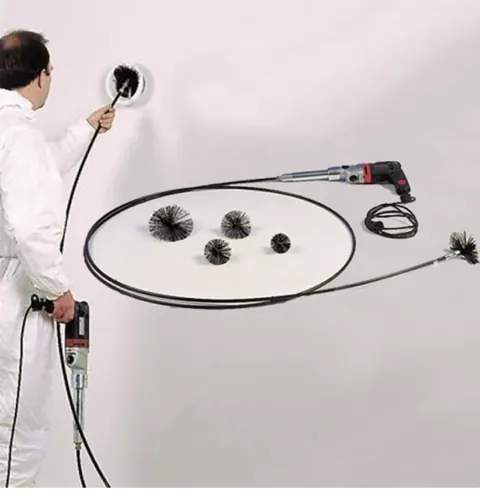 PD4 duct cleanerPD4: runs on a power drill, shaft 2.5 to 7.5 m
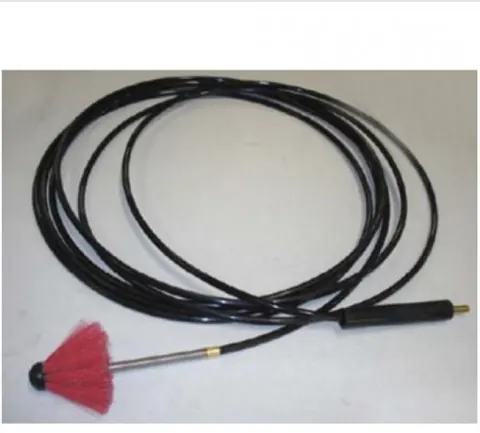 PD2 duct cleanerPD2: compact duct cleaner, specifications via Lamers
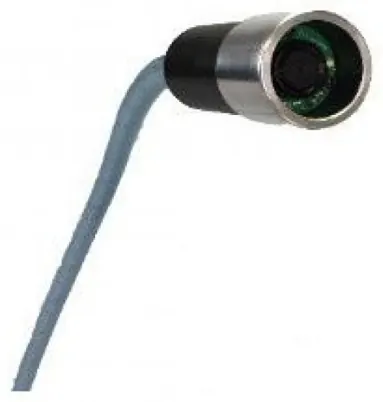 Intelligent AirnozzleCompressed air with camera, ducts from 30 mm
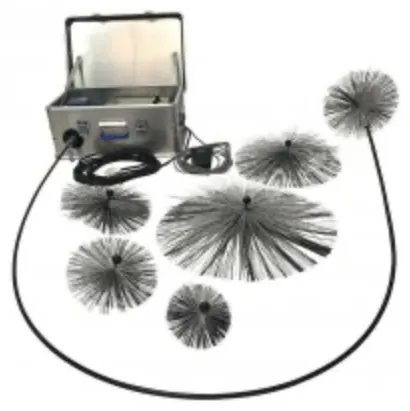 Duct cleaning brushesBrushes and shafts: soft, standard or Tynex
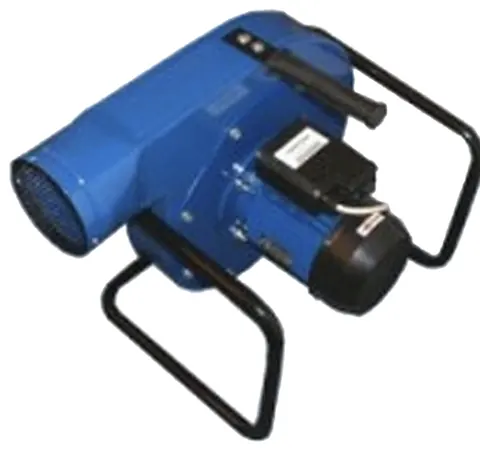 Duct sealing and extractionDuct balloons, diffuser caps and extraction
Frequently asked questions: air duct cleaning Den Haag
Why is access to ducts in Den Haag often harder than elsewhere?
According to CBS 2024, Den Haag has a density of 6,868 inhabitants per km2, the highest of the 14 municipalities on this site. Buildings are compact, plant rooms small and ducts run through shafts. That makes compact machines, access panels in the right place and a camera often more important than maximum power.
How do you prove to a client in Den Haag that the ducts are clean?
With a prior inspection using a camera and photos, and after cleaning a surface comparison or a gravimetric vacuum test according to NADCA. Record what you did for each duct section. In healthcare, organisations sometimes ask for separation between cleaner and inspector, a recommendation from VDI 6022 practice.
Do schools in Den Haag have to have their ventilation ducts cleaned?
There is no fixed statutory cleaning term for schools. Every classroom must have a CO2 meter, though, and Frisse Scholen asks for periodic technical and hygienic maintenance. RVO warns that ducts in new schools often contain construction dust. An inspection at handover and then at fixed moments is therefore sensible.
How many access panels does a duct in an office building in Den Haag need?
As a guideline, Eurovent mentions openings no more than 10 metres apart, or after at most two bends of 45 degrees or more, and on both sides of dampers, filters, attenuators and fans. For ducts wider than 500 mm the panel is at least 500 by 400 mm. Missing panels can be fitted afterwards.
Which equipment works well in cramped plant rooms in Den Haag?
For short, small ducts a compact machine on a power drill is handy, such as the PD4. For long runs you choose an electric brushing machine such as the DC4 with a shaft of up to 30 metres. Where access is limited, the Intelligent Airnozzle works well: it pulls itself through the duct with air pressure and has a camera.
How often do you inspect the air handling of a care location in Den Haag?
A widely used benchmark is VDI 6022: a hygiene inspection every 2 years for installations with humidification and every 3 years without. For operating theatres the Dutch guideline requires an air management plan with periodic checks. With humidification, article 4.87b of the Working Conditions Decree (Arbobesluit) on legionella also applies.
Which brush do you use for duct board in an older building in Den Haag?
A soft brush. The US EPA recommends soft brushes for fibreglass duct board and sheet metal, because hard brushes damage the material. Biocides are not EPA registered for fibreglass duct board. Danduct supplies soft, standard and Tynex brushes in sizes from 100 to 600 mm.
Does this page use the CBS figures for industry and agriculture in Den Haag?
Not on this page. The CBS table gives remarkably high numbers for Den Haag in agriculture and in industry and energy, which we could not explain. That is why we only use the total, the density and the sectors business services, trade and hospitality, and government, education and healthcare here.
Can a cleaning contractor in Den Haag work under the NVRL quality mark scheme?
The quality mark scheme of NVRL and TNO focuses on the cleanliness of air handling systems, with an emphasis on grease contamination in kitchen extraction in hospitality, hospitals, care homes and offices. The quality mark is valid for 1 year. Whether a company takes part is its own decision. The scheme does provide useful measuring methods, such as the wet film thickness gauge.
Does Lamers itself come to clean ducts in Den Haag?
No. Lamers Reinigingstechniek from Zelhem is an equipment supplier, not a cleaning contractor. You can turn to Lamers for machines, brushes, sealing caps and extraction, and for advice on the right set. Request a quotation, ask for a callback or send a question. The work is carried out by you or by your cleaning partner.
Sources and reference date
All facts on this page were checked on 6 October 2026.
- Statistics Netherlands (CBS) Key figures for districts and neighbourhoods 2024 (table 85984NED, in Dutch)
- Eurovent REC 6/7 Cleanliness of ductwork
- Danduct accessories
- IPLO: CO2 meter in schools (in Dutch)
- RVO: Frisse Scholen process manual (in Dutch)
- TÜV SÜD: VDI 6022 hygiene inspections (in German)
- EPA: air duct cleaning
- Eurofins: hygiene inspections of ventilation systems (in German)
Editorial team: Lamers Reinigingstechniek B.V., supplier of professional air duct cleaning equipment in Zelhem, the Netherlands. Updated on . See also about Lamers Reinigingstechniek for businesses.
Request a quote or advice from Lamers

René Hendriksen, Sales Account Manager at Lamers, advises you on the machine, brushes and extraction for your jobs.
Briefly tell us what you clean (duct type, diameter, length, contamination and sector). Lamers will contact you with advice and a tailored quote.
Prefer direct contact? Call +31 (0)314 623 341, message us on WhatsApp 06-38048347 or email info@lamersequipment.nl.
Prefer a quick call first? Lamers will call you back
Leave your number. René Hendriksen or a colleague from Lamers will call you back to discuss duct type, diameter and the right equipment.
Or send us a message right away: WhatsApp 06-38048347