

For the facilities team this means: no cleaning by gut feeling, but cleaning based on inspection, risk per room and a schedule that does not bring care to a standstill. On this page you will read which guidelines count, why the new European standard for ventilation cleanliness makes an exception for medical spaces, how to work zone by zone and which equipment you need. Lamers Reinigingstechniek from Zelhem in the Netherlands supplies that Danduct Clean equipment to facilities teams and specialist cleaning contractors.

Which guidelines apply to ventilation ducts in a hospital?
In the Netherlands there is no single legal provision for hospitals that says how often a duct must be cleaned. The requirements come from a stack of documents that together form the framework. The SRI is the successor to the WIP guidelines for infection prevention; eight parties contribute to it, including NVZ, VHIG, ActiZ and UMCNL. For operating theatres, the air handling guideline is leading, and the Working Conditions Decree (Arbobesluit) applies to all workplaces.
| Document | What it covers | What it means for the ducts |
|---|---|---|
| Guideline on air handling in operating theatres and treatment rooms | Air management plan mandatory | Cleaning and inspection belong in the plan, with named responsible persons |
| Operating theatre monitoring | Monitoring the minimum supply air volume to the theatre and the set up room | A falling airflow can point to contamination or filter resistance |
| Preconditions for theatre class 1 and 2 | Signalling whether the air handling works properly | Faults immediately visible, also after works |
| Working Conditions Decree (Arbobesluit) art. 6.2 | Sufficient uncontaminated air, installation always ready for use | Applies to all staff workplaces |
| Working Conditions Decree (Arbobesluit) art. 4.87b | Legionella in air humidification installations | Risk analysis and management plan where humidification is used |
Why EN 15780:2025 does not cover the whole hospital
The European standard for the cleanliness of ventilation systems was revised in 2025. EN 15780:2025 replaces the 2011 version and deals with cleanliness classes, inspection intervals and acceptable cleanliness levels, now including kitchen extraction. Important for healthcare: according to the description of the standard, the new version applies to ventilation systems except industrial, medical and laboratory facilities. For operating theatres and treatment rooms you therefore rely on the healthcare guidelines and your air management plan. For the office section, the main entrance hall or the staff restaurant, EN 15780 can serve as a reference; agree this with your building services consultant.
Many hospitals also look at the German VDI 6022 Part 1 (January 2018 edition). It sets hygiene requirements for air handling installations and specifies a hygiene inspection every 2 years for installations with air humidification and every 3 years without. A Saxon implementation guide for hospitals describes how duct cleanliness is assessed with a dust density measurement by inspectors holding VDI 6022 category A training. A detailed explanation can be found under VDI 6022 ventilation hygiene.
Cleaning operating theatre ventilation: working zone by zone
A hospital runs 24 hours a day, so you work per zone and per air handling unit. The facilities team decides together with the infection prevention department when a section can be taken out of service. A working sequence that works well in practice:
- Inspect the section with a camera and record the starting situation in photos.
- Seal off the duct section with duct balloons and cover valves and diffusers with foam caps.
- Keep the section being cleaned under continuous negative pressure with an extraction unit. If it exhausts inside the building, a HEPA filter of 99.97% at 0.3 µm is required.
- Clean with rotating brushes or compressed air, working from clean to dirty and towards the extraction point.
- Check the result with a surface comparison or a gravimetric vacuum test according to NADCA.
- Put the section back into service and check that the signalling reports no fault.
To see which caps and balloons you need, look at negative pressure HEPA extraction.
Organising inspection and cleaning separately
A common piece of advice from hygiene practice is to assign cleaning and the hygiene inspection to different parties. That way the same party is not judging its own work, which strengthens the objectivity of your file. A hygiene inspection comprises a visual assessment of cleanliness and a microbiological assessment of the supply air and the reference air.
Plan a first inspection at three moments: for a new installation before it is put into use, after a major modification and for an installation that has never been inspected. A compressed air nozzle with a built-in camera, such as the Intelligent Airnozzle for cleaning contractors, also shows you during cleaning what is sitting in bends and corners.
Which equipment suits healthcare duct cleaning?
In a hospital you find ducts of every size: small exhaust ducts above washrooms, medium sized supply ducts to treatment rooms and large main ducts at the air handling units. That calls for more than one machine.
| Equipment | Use in the hospital | Features from the specifications |
|---|---|---|
| DC4 (Danduct Clean) | Supply and exhaust ducts of treatment rooms and corridors | Ducts 100 to 600 mm, up to 30 m, round and square, 90 degree bends, 230 volts |
| PD4 (Danduct) | Short ducts at washrooms and small rooms | Power drill drive, shaft 2.5 to 7.5 m, brushes 100 to 600 mm |
| PD2 | Maintenance work in smaller ducts | Specifications via Lamers |
| Intelligent Airnozzle | Ducts with many bends and inspection during cleaning | From 30 mm, camera with LED, 20 m hose, compressor 700 L/min at around 10 bar |
| Duct balloons and foam caps | Sealing off a section, preventing spread | Duct section and valves temporarily closed |
For the main task, the Danduct Clean DC4 for cleaning contractors is the workhorse: you feed the shaft into the duct and the machine automatically rotates left and right. For fibreglass duct board and sheet metal, the US EPA recommends soft brushes. So choose deliberately between soft, normal and Tynex, and first read about ventilation duct brush. All options side by side are on the page with compare duct cleaning kits for cleaning contractors.
How often should you clean or check hospital ventilation ducts?
A fixed cleaning frequency for hospital ducts is not laid down in Dutch law. You work with inspection intervals and clean when the inspection gives reason to.
| Source | Interval | Explanation |
|---|---|---|
| VDI 6022 (TÜV SÜD) | Hygiene inspection every 2 years | Installations with air humidification |
| VDI 6022 (TÜV SÜD) | Hygiene inspection every 3 years | Installations without air humidification |
| Trade article on EN 15780 | Annual risk assessment | High risk buildings such as hospitals and labs |
| EN 15780:2025 annex A | Intervals per cleanliness class in months | Informative; not for medical spaces |
More about intervals per building type can be found under ductwork cleaning schedule. A practical tip: record each inspection result per zone in the same format, so you can compare the condition of a section over the years and justify why you cleaned it, or why not yet.
Misconceptions about duct cleaning in healthcare
- Clean filters mean clean ducts. Filters catch a lot, but dust also sticks to duct walls. According to the EPA, much of the dust stays stuck to the wall.
- A disinfectant solves it. The EPA has not registered any biocides for use on fibreglass duct board and does not recommend coatings as a routine measure. Mechanical cleaning remains the basis.
- Compressed air only spreads dirt. Without negative pressure that is true. With continuous extraction and sealed sections, compressed air is a usable method.
- New installations are clean. That is why inspection bodies recommend a first hygiene inspection before an installation is put into use.
Each of these misconceptions leads to the same mistake: relying on an assumption instead of an inspection. In a hospital, where the air in patient areas matters so much, the camera image and the measurement are what count, not the appearance of the grille.
Fictional example: a wing with treatment rooms
Fictional example. A hospital wants to tackle a wing with eight treatment rooms and a corridor. The camera inspection shows dust in the supply ducts and a grease layer in the exhaust duct of the pantry. The facilities team plans two nights: night one the supply side with a brushing machine under negative pressure, night two the exhaust side and the pantry. In every room the valves are sealed with foam caps. Afterwards a check follows by a party other than the cleaner, and the photo report goes into the air management plan. The price depends on length, contamination and accessibility and is therefore by quote.
How to estimate the cost of such a project is explained under prices for ductwork cleaning. If you also work for long term care, look at air duct cleaning in care homes. Want to know which machine suits your hospital? You can always duct cleaning equipment quote. Other sectors can be found under ductwork cleaning per industry.
Air duct cleaning equipment from Lamers at a glance
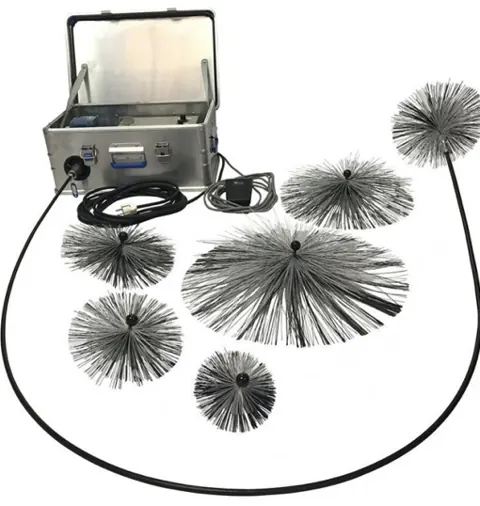 DC4 duct cleaning machineDC4: electric, up to 30 m, ducts from 100 to 600 mm
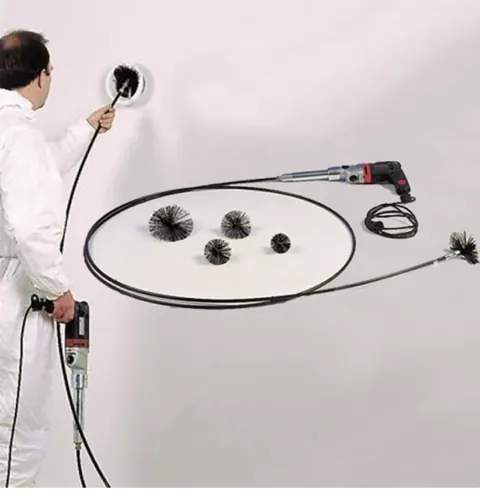 PD4 duct cleanerPD4: runs on a power drill, shaft 2.5 to 7.5 m
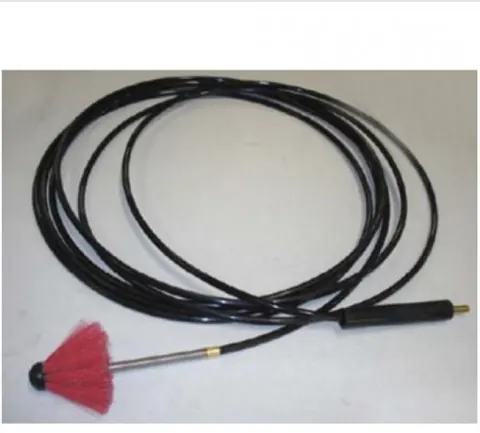 PD2 duct cleanerPD2: compact duct cleaner, specifications via Lamers
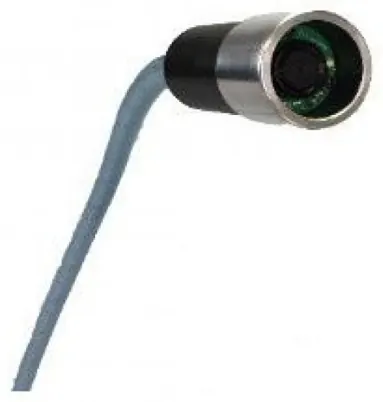 Intelligent AirnozzleCompressed air with camera, ducts from 30 mm
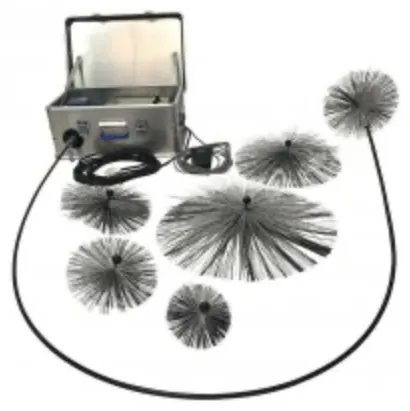 Duct cleaning brushesBrushes and shafts: soft, standard or Tynex
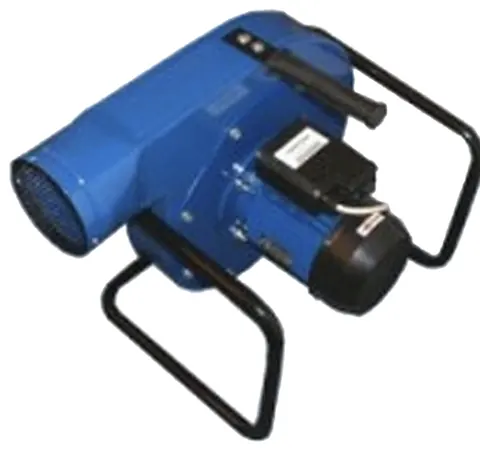 Duct sealing and extractionDuct balloons, diffuser caps and extraction
Frequently asked questions: hospital air duct cleaning
Is an air management plan mandatory for the operating theatres of a Dutch hospital?
Yes. The guideline on air handling in operating theatres and treatment rooms calls the air management plan a mandatory element. The plan covers technical management, maintenance and periodic checks, and lays down procedures and responsibilities for air quality in the theatre. Cleaning and inspecting the ducts therefore belong in it, with a clear owner.
Does EN 15780:2025 apply to the air ducts in a hospital?
Not for all spaces. According to the description of the standard, EN 15780:2025 applies to ventilation systems except industrial, medical and laboratory facilities. For operating theatres and treatment rooms you use the healthcare guidelines and your air management plan. For general areas such as offices or the main hall, the standard can serve as a reference. Consult your adviser per space.
How often should a hospital air handling system receive a hygiene inspection?
According to VDI 6022, which is also used as a reference in hospitals, every 2 years for installations with air humidification and every 3 years without. A trade article on EN 15780 mentions an annual risk assessment for high risk buildings such as hospitals. You clean when the inspection gives reason to.
What is checked during a hygiene inspection of hospital ducts?
A hygiene inspection consists of a visual assessment of cleanliness and a microbiological assessment of the supply air and the reference air. In a German implementation guide for hospitals, duct cleanliness is also assessed with a dust density measurement carried out by inspectors who hold VDI 6022 category A training.
May the same party clean and approve the ducts in a hospital?
It is allowed, but it is not recommended. Advice from hygiene practice is to separate cleaning from the hygiene inspection, so that the assessment stays objective. For your air management plan and any audits, an independent check after cleaning is stronger evidence than a report written by the cleaner itself.
How do you prevent dust from spreading during hospital duct cleaning?
Keep the section being cleaned under continuous negative pressure with extraction units, seal the duct section with duct balloons and cover valves with foam caps. If the extraction unit exhausts inside the building, a HEPA filter that stops 99.97% of particles of 0.3 µm is required. Work zone by zone, outside the busy hours.
Which machine do you use for the supply ducts of hospital treatment rooms?
For round and square ducts from 100 to 600 mm, the DC4 from Danduct Clean is suitable. It cleans up to 30 metres deep, including through 90 degree bends and vertical sections, and rotates automatically left and right. For short ducts at washrooms, a compact cleaner driven by a power drill is more practical. Lamers advises on the right combination.
What are the guide values for humidifier water in a hospital installation?
A Saxon implementation guide of VDI 6022 for hospitals gives these values for humidifier water: Legionella below 100 CFU per 100 ml, a total colony count below 1,000 CFU per ml and Pseudomonas below 100 CFU per 100 ml. In the Netherlands, article 4.87b of the Working Conditions Decree (Arbobesluit) also requires measures against legionella in humidification installations.
When is the first hygiene inspection of a new hospital installation needed?
At three moments: for a new installation before it is put into use, after a major modification to the installation and for an installation that has never been inspected. That way you know construction dust or assembly residue will not end up in the air of patient areas, and you have a baseline for your air management plan.
Can a compressed air nozzle with a camera help when inspecting hospital ducts?
Yes. The Intelligent Airnozzle has a built-in camera with LED lighting, cleans ducts from 30 mm and handles tight 90 degree bends. You see the image on a separate monitor while you clean. You need a compressor delivering 700 L/min or more at around 10 bar, or nitrogen.
Sources and reference date
All facts on this page were checked on 6 October 2026.
- Guideline: air management plan for the operating theatre (in Dutch)
- Guideline: monitoring of the air handling system in the operating theatre (in Dutch)
- SRI collaboration on infection prevention (in Dutch)
- NS-EN 15780:2025
- Implementing VDI 6022 in hospitals (in German)
- Eurofins: hygiene inspections according to VDI 6022 (in German)
- UMD: negative pressure and HEPA in duct cleaning
- Intelligent Airnozzle at Lamers (in Dutch)
Editorial team: Lamers Reinigingstechniek B.V., supplier of professional air duct cleaning equipment in Zelhem, the Netherlands. Updated on . See also Lamers Equipment for cleaning contractors.
Request a quote or advice from Lamers

René Hendriksen, Sales Account Manager at Lamers, advises you on the machine, brushes and extraction for your jobs.
Briefly tell us what you clean (duct type, diameter, length, contamination and sector). Lamers will contact you with advice and a tailored quote.
Prefer direct contact? Call +31 (0)314 623 341, message us on WhatsApp 06-38048347 or email info@lamersequipment.nl.
Prefer a quick call first? Lamers will call you back

Leave your number. René Hendriksen or a colleague from Lamers will call you back to discuss duct type, diameter and the right equipment.
Or send us a message right away: WhatsApp 06-38048347