

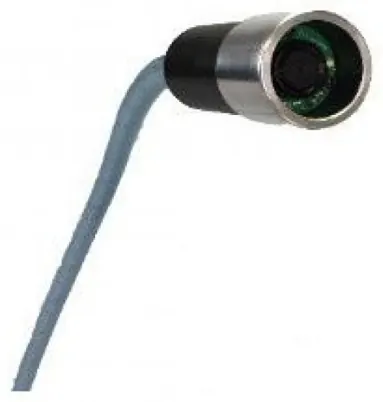
Lamers Reinigingstechniek, supplier of the Airnozzle, is honest about it: cleaning with an air nozzle has always been considered less effective than rotating brushes. The camera changes that, because you see what you are doing. On this page you will read how it works, what your compressor needs to deliver, where compressed air does and does not fit, and why you need to be careful in bakeries.

How does cleaning with a compressed air nozzle and camera work?
The nozzle is attached to a 20 metre hose that comes with the delivery. The nozzle propels itself using the air pressure and blows the dust off the duct wall as it goes. So you do not need to push or rotate anything, as you would with a shaft and brush.
The head contains a camera and LED lighting. The black and white image runs through a standard A/V output to a monitor, which you buy separately. The Airnozzle can be connected to the Danduct Clean control boxes and is supplied in a transport case.
The work cycle in four steps
- Seal off the duct section and put it under negative pressure with an extraction unit.
- Insert the nozzle through a grille or inspection hatch and open the compressed air.
- Follow the progress of the head on the monitor and linger at bends and connections.
- Pull the hose back slowly and check the image once more for any remaining dirt.
What does your compressor need for compressed air duct cleaning?
According to Lamers, the Airnozzle needs a compressor delivering 700 litres per minute or more at about 10 bar. As an alternative you can use nitrogen. A small workshop compressor usually does not reach that, so first check what your compressor actually delivers.
| Requirement | Value according to Lamers | What you check |
|---|---|---|
| Air delivery | 700 L/min or more | Effective delivery on the rating plate, not the intake value |
| Pressure | around 10 bar | Whether the pressure stays stable during prolonged use |
| Alternative | nitrogen | Arrangements for safe use of gas cylinders on site |
| Hose | 20 m included | Whether 20 m from the nearest opening gets you far enough |
| Image | black and white via A/V output | A monitor with A/V input (separate) |
Source: Lamers and Danduct Clean, reference date 6 October 2026. If you are unsure whether your existing compressor is up to the job, mention its make and type in your question to Lamers.
When do you choose compressed air and when a brush for your air ducts?
Compressed air and brushes are not rivals; they are tools for different ducts. Cleaning contractors list compressed air as a method for round, oval and rectangular ducts, alongside rotating brushes, robots with cameras and manual work.
| Situation | Compressed air with camera | Rotating brush |
|---|---|---|
| Thin ducts and flexible connections | ✓ from 30 mm | ✗ DC4 and PD4 brushes start at 100 mm |
| Many tight bends in a row | ✓ self propelling | 90 degree bends are possible, but the shaft has to follow |
| Seeing what you clean | ✓ built-in camera | ✗ separate inspection camera needed |
| Stuck on dirt in a large cross section | less suitable | ✓ mechanical force of the brush |
| Long straight runs up to 30 m | limited to the hose length | ✓ with the DC4 |
For heavy jobs in large ducts, the electric DC4 brushing machine is the logical choice. To find out which brush goes with it, look at brushes for air ducts. Many professionals carry both in the van and choose per run.
Compressed air duct cleaning in bakeries: why be careful?
There is an important nuance here. Sources for the bakery sector are clear about cleaning with compressed air in the production area. The Belgian sector organisation Alimento rules out compressed air, hand brushes and brooms and recommends an industrial vacuum cleaner with a HEPA filter. A TNO memo for the bakery sector says: no more compressed air for cleaning, use a vacuum cleaner.
The reason is flour dust. The Health Council of the Netherlands (Gezondheidsraad) recommends a health based value of 0.2 mg/m³ over eight hours for inhalable wheat flour dust. That is advice, not a legal limit. Anyone who blows flour around with compressed air puts it right into the breathing zone. TNO also states that a dust explosion is possible above 60 g/m³ of fine dust such as flour or sugar, and that an ATEX 114 certified vacuum cleaner is needed in EX zones.
What does that mean for the Airnozzle?
- Do not use the Airnozzle in dusty zones where flour dust can escape freely into the room.
- In a bakery, only work in a fully sealed duct section under negative pressure, and discuss beforehand whether brushing with extraction is the better fit.
- Take EX zones into account, along with the requirements for equipment allowed there. Have this assessed by whoever is responsible for the ATEX zoning.
More about this sector can be found under flour dust in bakery ducts.
Why is negative pressure essential when using compressed air in ventilation ducts?
Compressed air loosens dust and moves it. Without extraction, that dust simply travels with the airflow, back into the room or further into the system. Cleaning contractors point out that negative pressure prevents dirt from spreading. An American duct cleaning specification requires every section being cleaned to be kept under continuous negative pressure.
The same specification also requires a HEPA filter rated at 99.97% for 0.3 µm particles whenever the extraction unit discharges inside the building. If you discharge outdoors, that requirement does not apply in the same way. How to set this up with balloons, valve caps and an extraction unit is explained under negative pressure with HEPA extraction.
If you work in the food industry, also pay attention to the direction of the airflow. The Netherlands Food and Consumer Product Safety Authority (NVWA) asks that airflows from contaminated to clean areas be avoided. So plan where you start and where you extract.
What does the Airnozzle camera show you?
The camera turns a blind job into a controlled job. KHN (Royal Dutch Hospitality Association) notes that serious contamination is often not visible to the naked eye. With an image from the head you see deposits in bends, dust on horizontal sections and loose objects that do not belong there.
- Before cleaning: determine where the dirt is and whether compressed air will be enough.
- During cleaning: stay longer at spots where the dirt does not come loose.
- Afterwards: check whether the duct looks clean. For a formal cleanliness assessment there are separate measurement methods.
The EN 15780 standard was revised in 2025 and provides cleanliness classes, assessment of the need for cleaning and assessment of the result. More on this under duct cleaning standards.
Which users is the Intelligent Airnozzle intended for?
The Airnozzle suits organisations that work with small ducts that are difficult to reach: cleaning contractors, installers and facilities teams with their own compressor. Typical locations are thin exhaust ducts, flexible connections to grilles and ducts with many bends that a shaft will not pass through.
Fictional example: an installer maintains the ventilation of an office and finds narrow flexible hoses behind the ceiling grilles. A 100 mm brush does not fit there. With the Airnozzle he blows each section clean and shows the client on the monitor what the inside of the duct looks like.
Not sure whether compressed air or a brush fits better? First compare all options under tools for cleaning air ducts, or send a question and ask for duct cleaning advice.
Air duct cleaning equipment from Lamers at a glance
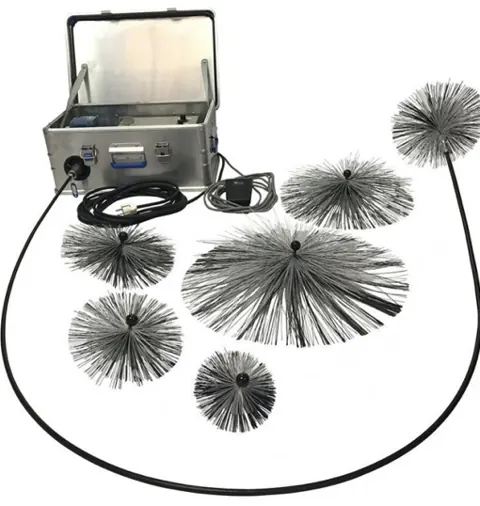 DC4 duct cleaning machineDC4: electric, up to 30 m, ducts from 100 to 600 mm
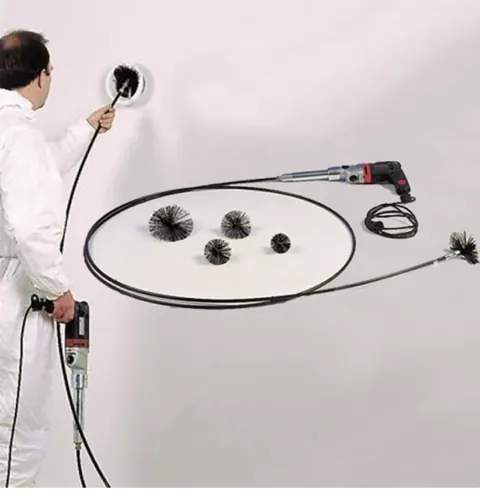 PD4 duct cleanerPD4: runs on a power drill, shaft 2.5 to 7.5 m
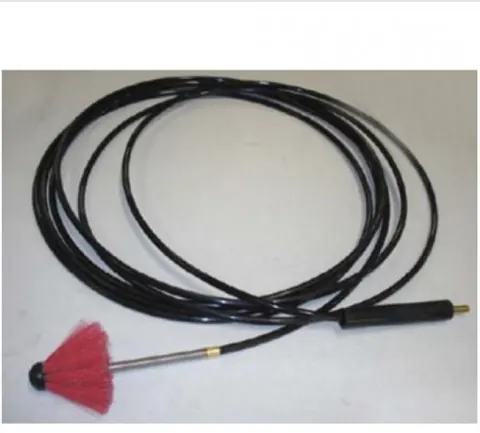 PD2 duct cleanerPD2: compact duct cleaner, specifications via Lamers
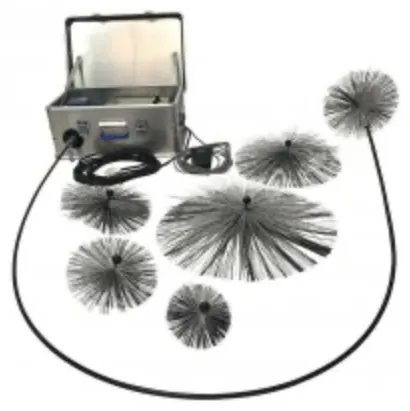 Duct cleaning brushesBrushes and shafts: soft, standard or Tynex
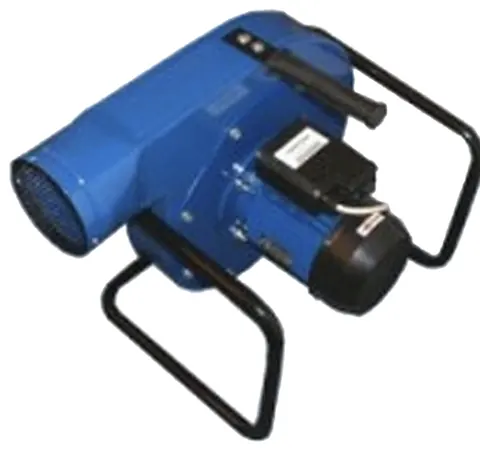 Duct sealing and extractionDuct balloons, diffuser caps and extraction
Frequently asked questions: Intelligent Airnozzle
Which compressor do I need for the Intelligent Airnozzle?
According to Lamers, you need a compressor that delivers 700 litres per minute or more at about 10 bar. Nitrogen is an alternative. Look at the effective air delivery of your compressor rather than the intake value, and if in doubt, mention the make and type in your question to Lamers.
From which duct diameter does the Intelligent Airnozzle work?
The Intelligent Airnozzle is suitable for ducts from 30 mm in diameter. That lets it into thin exhaust ducts and flexible connections where the DC4 and PD4 brushes, which start at 100 mm, do not fit. It also handles tight 90 degree bends.
Does the Intelligent Airnozzle come with a monitor?
No. The camera in the head provides a black and white image through a standard A/V output, but you buy the monitor separately. A 20 metre hose and a transport case are included. The Airnozzle can also be connected to Danduct Clean control boxes.
May I clean an air duct in a bakery with compressed air?
Be cautious. Alimento and a TNO memo for the bakery sector advise against compressed air for cleaning, because it stirs up flour dust. Do not use the Airnozzle in dusty zones, work only in a sealed duct section under negative pressure and discuss whether brushing with extraction is a better fit.
Is cleaning with a compressed air nozzle less thorough than with a brush?
Lamers states that an air nozzle has always been considered less effective than rotating brushes. With the built-in camera, however, you see every spot and corner, so you can work in a targeted way. For stuck on dirt in large ducts, a rotating brush often remains the better choice.
How far into a ventilation duct does the Intelligent Airnozzle reach?
The Airnozzle comes with a 20 metre hose. The nozzle moves forward on its own using the air pressure, including through bends. How far you get in practice depends on the route of the duct, so measure the distance from the opening where you insert the hose beforehand.
Do I need extraction when working with the Airnozzle?
Yes. Compressed air moves dust; it does not remove it. Put the duct section under negative pressure with an extraction unit and seal off the valves. An American cleaning specification requires a HEPA filter of 99.97% at 0.3 µm if the extraction exhausts inside the building.
Can I use the Airnozzle camera to inspect a duct without cleaning it?
The camera is intended to show you what you are doing while cleaning. You can also use the image beforehand to determine where the dirt is. For a formal inspection or cleanliness measurement there are separate methods, such as the assessments described in EN 15780.
Does the Intelligent Airnozzle also work in rectangular air ducts?
Cleaning contractors list compressed air as a method for round, oval and rectangular ducts. For how the Airnozzle behaves in your specific rectangular ducts, send the dimensions to Lamers. You will then receive advice based on your own situation.
How do I request a quote for the Intelligent Airnozzle?
Request a quote through the form, ask for a callback or send Lamers a question. State the duct sizes, the type of building and which compressor you have. Lamers can then tell you whether you need a monitor or control box and what else belongs with it.
Sources and reference date
All facts on this page were checked on 6 October 2026.
- Lamers: Intelligent Airnozzle (in Dutch)
- Danduct Clean: Intelligent Airnozzle
- AQ Group: air duct cleaning (in Dutch)
- Alimento: flour dust in bakeries (in Dutch)
- TNO Dust free working: choosing vacuum cleaners in the bakery sector (in Dutch)
- Health Council of the Netherlands: wheat and other cereal flour dusts
- University of Maryland Facilities: duct cleaning specification
- KHN: preventing odour nuisance, fire risk and a cooking ban (in Dutch)
Editorial team: Lamers Reinigingstechniek B.V., supplier of professional air duct cleaning equipment in Zelhem, the Netherlands. Updated on . See also Lamers from Zelhem.
Request a quote or advice from Lamers

René Hendriksen, Sales Account Manager at Lamers, advises you on the machine, brushes and extraction for your jobs.
Briefly tell us what you clean (duct type, diameter, length, contamination and sector). Lamers will contact you with advice and a tailored quote.
Prefer direct contact? Call +31 (0)314 623 341, message us on WhatsApp 06-38048347 or email info@lamersequipment.nl.
Prefer a quick call first? Lamers will call you back

Leave your number. René Hendriksen or a colleague from Lamers will call you back to discuss duct type, diameter and the right equipment.
Or send us a message right away: WhatsApp 06-38048347