

This page is intended for facilities teams, health, safety and environment coordinators and maintenance companies in Dordrecht. The central question is: how do you organise duct maintenance so that it can be demonstrated? You will read which intervals and limit values offer guidance, what a logbook looks like and which brush and machine belong with which dust. Lamers Reinigingstechniek from Zelhem supplies the equipment; you do the work yourself or have it done by a specialist.

Dordrecht in figures: a highly urban municipality with many manufacturers
Dordrecht has 122,070 inhabitants on 7,756 hectares of land and ranks 25th of the 342 municipalities (CBS 2024). CBS classifies the municipality as extremely urbanised (class 1). The combination stands out: an urban profile with an industrial share that is higher than in many other large cities on this site.
| Sector | Establishments | Share | Type of duct that needs attention |
|---|---|---|---|
| Business services | 3,760 | 23.2% | Comfort ventilation in offices |
| Manufacturing and energy | 3,110 | 19.2% | Local exhaust ventilation, process air ducts |
| Government, education and care | 2,915 | 18.0% | Hygiene in air handling |
| Trade and hospitality | 2,720 | 16.8% | Grease in kitchen extraction |
| Culture, recreation, other services | 1,535 | 9.5% | Halls and sports facilities |
Manufacturing plus trade and hospitality together make up 35.9% of all establishments: more than a third of businesses therefore have ducts with grease or production dust rather than just office dust.
Which intervals and limit values apply to industrial extract ducts?
There is no Dutch statutory cleaning frequency for process extraction. There are, however, points of reference you can adopt in your maintenance plan:
- 14 months: the British HSE requires local exhaust ventilation to be thoroughly examined and tested at least every 14 months, with the report kept for 5 years.
- 10 and 5 mg/m³: for inert dust in metalworking, 10 mg/m³ inhalable and 5 mg/m³ respirable apply (8 hour time weighted average).
- Arbobesluit Art. 4.5: if you extract contaminated air, sufficient clean air must be supplied at the same time, under the Working Conditions Decree.
- Local exhaust ventilation: a flexible extraction system close to the work is the basis; dirty ducts reduce its effectiveness.
Please note: EN 15780:2025 is not intended for industrial process installations. The comfort ventilation of the office and canteen does fall under it. More about the distinction can be found under industrial ductwork cleaning.
Building a duct logbook: what do you record for each run?
During an inspection, nobody wants to see a pile of loose invoices. A logbook per duct run makes your maintenance verifiable. This is a practical structure:
| Field | Example entry | Why |
|---|---|---|
| Run and function | Extraction for the saw line, 250 mm duct | Unambiguous to find again |
| Type of contamination | Fine wood dust | Determines the brush and safety measures |
| Inspection date | With photos | Reference point for next time |
| Cleaning date and method | Rotating brush under negative pressure | Demonstrable work |
| Result after cleaning | Camera image, measurement if available | Evidence for insurer or inspector |
| Next check | Within 14 months | HSE benchmark for local exhaust ventilation |
If you have a wet cooling tower, a separate legionella management plan with its own logbook is needed, with ISSO publication 55.3 as guidance (RIVM, the Dutch National Institute for Public Health and the Environment).
Wood, metal and grease: each type of dust has its own safety question
Fine wood dust can explode; fire safety literature calls for attention to extraction installations, spark detection and ATEX. Grease in kitchen extraction is highly flammable, Rabobank warns. Metal dust is mainly an exposure issue. This means that before cleaning you determine for each run:
- Which type of dust is in it, and is there an explosion hazard (EX) zone?
- Will you work dry or wet? Dry methods are usually sufficient, but extract ducts from commercial kitchens need wet methods.
- Which extraction will you use to capture the loosened dust?
- Who releases the installation for use afterwards?
Write the answers into the logbook line for that run. Then the next person who cleans it does not need to work everything out again.
Which brush and machine for duct cleaning Dordrecht?
Danduct Clean supplies brushes in three grades of hardness: soft, standard and the more aggressive Tynex, in diameters from 100 to 600 mm. For stuck on production dust in sheet steel ducts you lean towards the sturdy version, for fragile duct material the soft one. An explanation per duct type is given under air duct brush for cleaning contractors.
| Application | Brush | Machine |
|---|---|---|
| Office and canteen ventilation | Standard | DC4 or PD4 |
| Stuck on process dust | Tynex ✓ | DC4, up to 30 m |
| Fragile duct material | Soft ✓ | DC4 or PD4 |
| Duct wider than 600 mm | ✗ out of range | Ask for advice |
All machines and accessories at a glance can be found when you compare duct cleaning kits in practice.
Fictional example: a metalworking firm with welding extraction and a staff canteen
A fictional metalworking firm in Dordrecht has three welding stations with local exhaust ventilation, an office with mechanical ventilation and a canteen with an extractor hood. The facilities team creates three logbook entries: the welding extraction gets a check within 14 months, the office ducts are assessed against the cleanliness classes of EN 15780:2025 and the canteen hood follows hospitality practice of at least once a year. That way every duct has its own rhythm in a single overview. Fictional example, with no real client or figures.
Ventilation duct cleaning Dordrecht and the Drechtsteden region
Lamers has no branch in Dordrecht; equipment goes from Zelhem to the whole country. If you work in several municipalities in the region, compare with air duct cleaning in Rotterdam, where large industrial ducts are central, and air duct cleaning in Hoeksche Waard. Other municipalities can be found under duct cleaning by municipality for cleaning contractors. Request a quote or a callback for advice.
Air duct cleaning equipment from Lamers at a glance
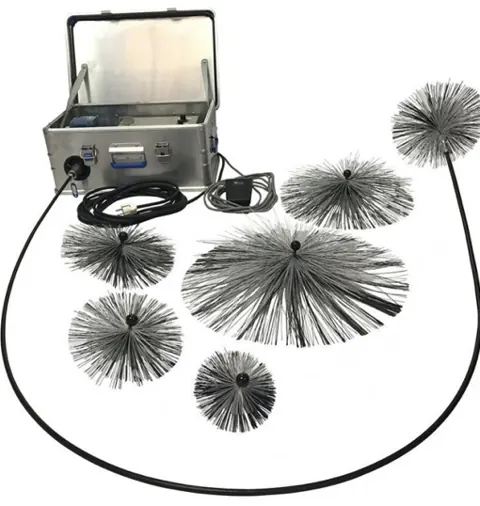 DC4 duct cleaning machineDC4: electric, up to 30 m, ducts from 100 to 600 mm
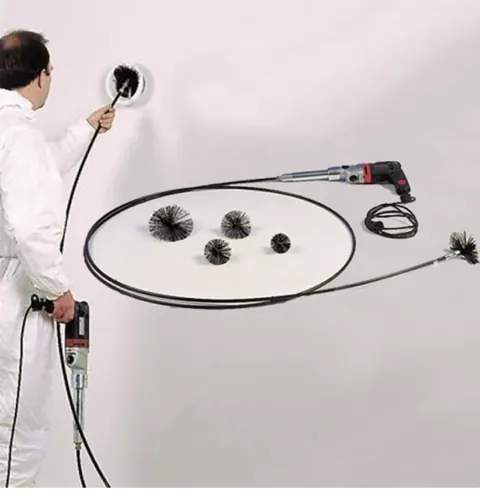 PD4 duct cleanerPD4: runs on a power drill, shaft 2.5 to 7.5 m
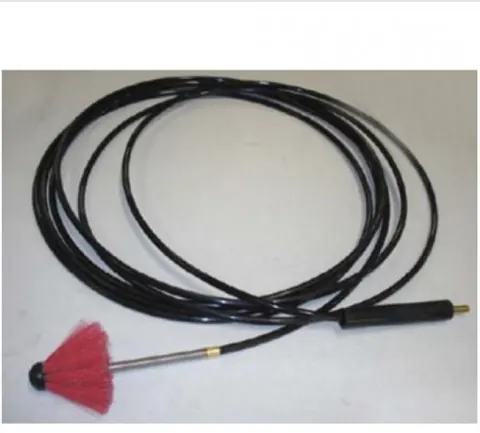 PD2 duct cleanerPD2: compact duct cleaner, specifications via Lamers
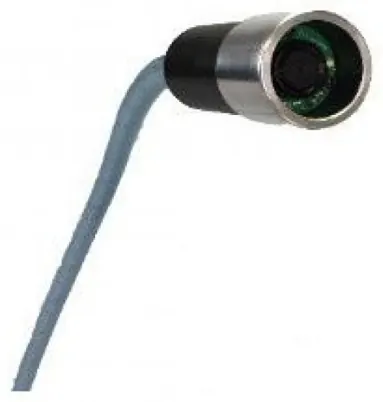 Intelligent AirnozzleCompressed air with camera, ducts from 30 mm
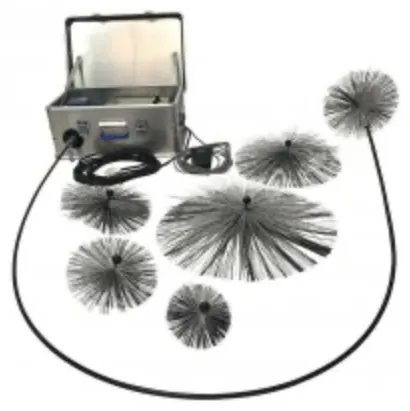 Duct cleaning brushesBrushes and shafts: soft, standard or Tynex
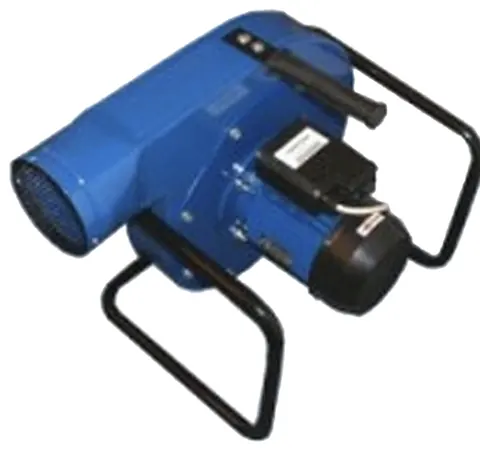 Duct sealing and extractionDuct balloons, diffuser caps and extraction
Frequently asked questions: air duct cleaning Dordrecht
How often should the process extraction in a Dordrecht factory be checked?
There is no Dutch statutory interval. As a point of reference, the British HSE requires local exhaust ventilation to be thoroughly examined and tested at least every 14 months, with a report kept for 5 years. Many facilities teams adopt that interval in their maintenance plan and clean when the inspection shows contamination.
Does industrial extraction in Dordrecht fall under EN 15780?
No. EN 15780:2025 applies to ventilation systems in buildings, but not to industrial process installations, nor to medical and laboratory facilities. The comfort ventilation of offices and canteens in a Dordrecht company does fall under it. So split your maintenance plan into process extraction and building ventilation.
What share of Dordrecht businesses is in manufacturing and energy?
According to CBS 2024, 3,110 of the 16,230 business establishments in Dordrecht are in manufacturing and energy. That is 19.2%. Together with trade and hospitality (16.8%), this amounts to 35.9% of establishments: businesses that often have production dust or grease in their ducts.
What goes into an air duct logbook for a Dordrecht company?
Record for each run the function and diameter, the type of contamination, the inspection date with photos, the cleaning date and method, the result after cleaning and the next check date. Keep the report for at least 5 years, in line with the HSE period for local exhaust ventilation. That makes your maintenance demonstrable.
Which brush do you use for stuck on production dust in Dordrecht?
Danduct Clean has soft, standard and more aggressive Tynex brushes, from 100 to 600 mm. For stuck on dust in sheet steel ducts you lean towards Tynex, for fragile duct material a soft brush. Combine the brush with a DC4 for long runs of up to 30 metres.
Which dust limit values apply in Dordrecht metalworking?
For inert dust, 10 mg/m³ inhalable and 5 mg/m³ respirable apply, as an 8 hour time weighted average. Well functioning local exhaust ventilation close to the work helps to stay below them. Dirty extract ducts reduce that effectiveness, so inspecting the ducts is part of controlling exposure.
Does a cooling tower at a Dordrecht company need a logbook?
Yes. According to RIVM, a wet cooling tower requires a risk analysis, a legionella management plan and a logbook, with ISSO publication 55.3 as guidance. That is separate from cleaning the ventilation ducts, but you can include both in the same maintenance file so an inspector finds everything in one place.
Is wood dust in extract ducts in Dordrecht an explosion risk?
Yes, fine wood dust can lead to a dust explosion. That is why fire safety literature calls for attention to extraction installations, spark detection and ATEX. Before cleaning, determine whether there is an EX zone and adapt the extraction and tools accordingly. If in doubt, ask for advice before you start.
Do you clean dry or wet in a commercial kitchen duct in Dordrecht?
According to Eurovent, dry methods are usually sufficient for supply and general extract ducts. Extract ducts from commercial kitchens need wet methods, because grease cannot easily be brushed away. A spray system is available for the DC4. Ask Lamers which combination suits your duct.
Can I get Lamers equipment in Dordrecht without a branch in the city?
Yes. Lamers Reinigingstechniek is based in Zelhem and supplies equipment to companies throughout the Netherlands. Via the site you can request a quote, ask a question or request a callback. Lamers does not carry out cleaning work itself; you do that with your own facilities team or a cleaning specialist.
Sources and reference date
All facts on this page were checked on 6 October 2026.
Editorial team: Lamers Reinigingstechniek B.V., supplier of professional air duct cleaning equipment in Zelhem, the Netherlands. Updated on . See also Lamers from Zelhem in practice.
Request a quote or advice from Lamers

René Hendriksen, Sales Account Manager at Lamers, advises you on the machine, brushes and extraction for your jobs.
Briefly tell us what you clean (duct type, diameter, length, contamination and sector). Lamers will contact you with advice and a tailored quote.
Prefer direct contact? Call +31 (0)314 623 341, message us on WhatsApp 06-38048347 or email info@lamersequipment.nl.
Prefer a quick call first? Lamers will call you back
Leave your number. René Hendriksen or a colleague from Lamers will call you back to discuss duct type, diameter and the right equipment.
Or send us a message right away: WhatsApp 06-38048347