

A workshop comes with different rules from an office. Process extraction largely falls outside the European cleanliness standard for ventilation, and the Dutch Working Conditions Decree (Arbobesluit) puts the emphasis on removing contaminated air. This page sets out which yardsticks do apply, how a maintenance team plans the work and which equipment fits.
Lamers Reinigingstechniek from Zelhem supplies Danduct Clean cleaning equipment. Lamers has no branch in Helmond and does not clean ducts itself.

Helmond in figures: one in five businesses makes or processes something
Helmond has 95,874 inhabitants and ranks 33rd among Dutch municipalities (CBS 2024). The breakdown of establishments shows where the maintenance work lies:
| CBS sector | Helmond | Share | For comparison: Eindhoven |
|---|---|---|---|
| Business services | 2,430 | 21.9% | 28.2% |
| Manufacturing and energy | 2,285 | 20.6% | 11.4% |
| Trade and hospitality | 2,140 | 19.3% | 17.5% |
| Government, education and care | 1,755 | 15.8% | 15.9% |
| Culture, recreation and other services | 1,160 | 10.4% | 11.2% |
Percentages calculated on the total per municipality. Where the neighbouring city is mainly offices, Helmond leans more towards manufacturing. That means more local exhaust ventilation, more production dust and more often a combination of factory hall, canteen and office under one roof.
Process extraction and EN 15780: which yardstick applies instead?
EN 15780 provides cleanliness classes, an assessment of the need for cleaning and frequencies for ventilation systems in buildings. The standard is explicitly not intended for industrial process installations. For the extraction at a welding or grinding station you therefore need to look elsewhere for guidance:
- Workplace limit values: Volandis gives 10 mg/m³ for inert inhalable dust and 5 mg/m³ for respirable dust, as an 8 hour time weighted average.
- Local exhaust ventilation: according to Volandis, a flexible extraction system close to the work is the basis.
- Testing local exhaust ventilation: the British Health and Safety Executive (HSE) requires local exhaust ventilation to be thoroughly examined and tested at least every 14 months, with the report kept for 5 years. That is British regulation, but a useful benchmark for your own maintenance plan.
For the office and canteen sections of the same building, EN 15780 remains the framework. How the standards fit together is explained under VDI 6022 ventilation hygiene for cleaning contractors.
What the Arbobesluit requires of extract and supply
Article 4.5 of the Arbobesluit deals with hazardous substances. It states that when contaminated air is extracted, sufficient clean air must be supplied at the same time. Well functioning extraction is therefore only half of the story: the supply air to the hall must also be in order.
In addition, Article 6.2 requires sufficient uncontaminated air at the workplace, an installation that is always ready for use and a monitoring system that signals faults where health requires it. Dirty ducts and filters work against this, because they reduce the airflow.
Combustible dust adds another layer. Fine wood dust creates an explosion hazard; the Dutch trade journal Brandveilig names extraction installations, spark detection and ATEX as points of attention. If you work in such an environment, always agree the cleaning method with the person responsible for explosion safety.
Duct cleaning Helmond: a maintenance plan for the facilities team
A manufacturer with its own maintenance department can plan most of the duct work itself. This sequence keeps it manageable:
- Make a list of all extraction points and the ducts behind them, kept separate from the building ventilation.
- Record for each extraction point which dust is released: metal, wood, fumes or oil mist.
- Schedule a fixed test of the local exhaust ventilation, for example within the 14 month interval the HSE mentions.
- Inspect the ducts with a camera where dust settles: horizontal sections, bends and just before the fan.
- Clean under negative pressure, so the dust does not end up back in the hall.
- Keep measurements and photos, so you can spot trends and show what was done during an inspection.
More about the approach in production environments can be found under industrial air duct cleaning.
Which equipment suits workshop ducts?
Workshop ducts are often robust, round or rectangular, and contain coarser or stickier dirt than office ducts. That asks more of the brush.
| Duct or situation | Choice | Explanation |
|---|---|---|
| 100 to 600 mm, long run | DC4 with aggressive brushes | ✓ up to 30 metres, Tynex brushes for stubborn dirt |
| Short branch to an extraction point | PD4 | ✓ on a power drill, shaft up to 7.5 metres |
| Ducts wider than 600 mm | tailored advice | ✗ beyond the range of the DC4 brushes |
| Capturing dust during cleaning | extraction fan with filtration | ✓ negative pressure in the duct section |
For wider ducts, ask Lamers what is possible. The DC4 duct cleaning machine in practice is the basis for most workshop ducts. All machines side by side are shown under duct cleaning kit in practice, and the means of creating negative pressure under vent caps for duct cleaning for businesses.
Fictional example: a metalworking firm with a canteen and an office
A metalworking company has a hall with four welding stations, a canteen with a small kitchen and an office above the workshop. That is three systems with three regimes:
- Welding extraction: a fixed test of the local exhaust ventilation, inspection of the ducts for deposits of welding fumes, cleaning with a more aggressive brush under negative pressure.
- Canteen kitchen: cleaning the grease filters regularly, inspecting the extract duct for grease.
- Office: inspection at the intervals from EN 15780, cleaning when there is excessive dust.
The mistake that is often made: putting everything on one interval. The welding extraction then gets too little attention and the office too much.
A simple way to avoid this is to give each system its own line in the maintenance plan, with its own trigger: a test date for the welding extraction, a grease check for the canteen and an inspection interval for the office.
Ventilation duct cleaning Helmond and in neighbouring Brabant municipalities
Anyone working from Helmond also ends up in the neighbouring municipalities. For air duct cleaning in Eindhoven the picture is more office oriented, with 28.2% business services. In Meierijstad, just as in Helmond, 20.6% of establishments are in manufacturing and energy (CBS 2024), so a kit for workshops is also well suited to ductwork cleaning for Meierijstad businesses.
All municipalities are listed under ductwork cleaning per municipality for businesses. Ask Lamers for advice on a kit that matches your mix of hall, kitchen and office.
Air duct cleaning equipment from Lamers at a glance
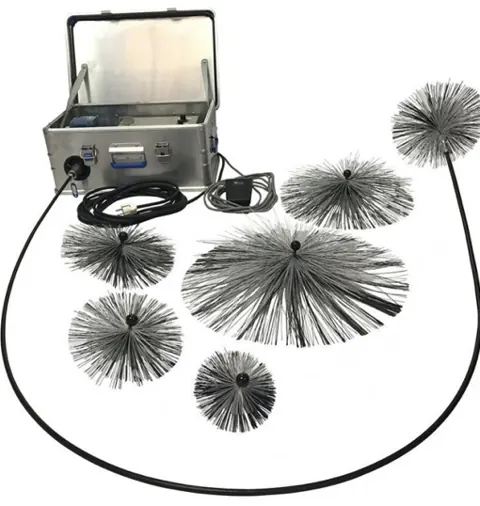 DC4 duct cleaning machineDC4: electric, up to 30 m, ducts from 100 to 600 mm
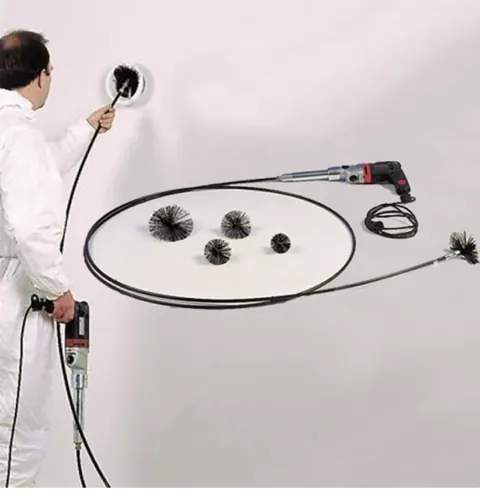 PD4 duct cleanerPD4: runs on a power drill, shaft 2.5 to 7.5 m
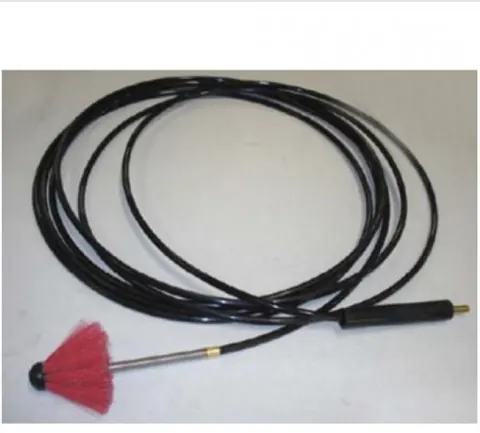 PD2 duct cleanerPD2: compact duct cleaner, specifications via Lamers
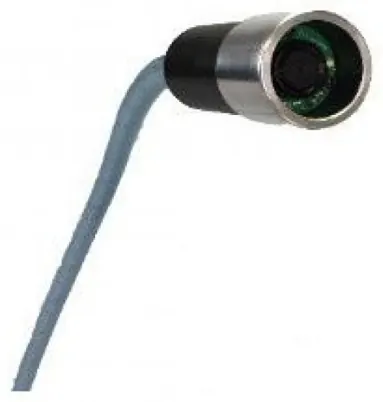 Intelligent AirnozzleCompressed air with camera, ducts from 30 mm
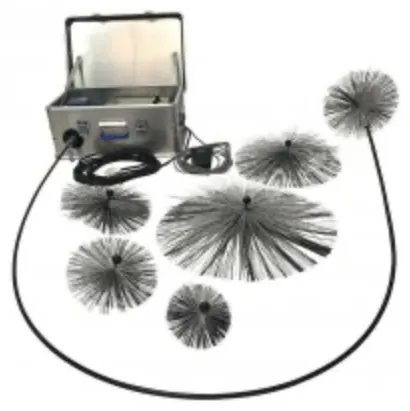 Duct cleaning brushesBrushes and shafts: soft, standard or Tynex
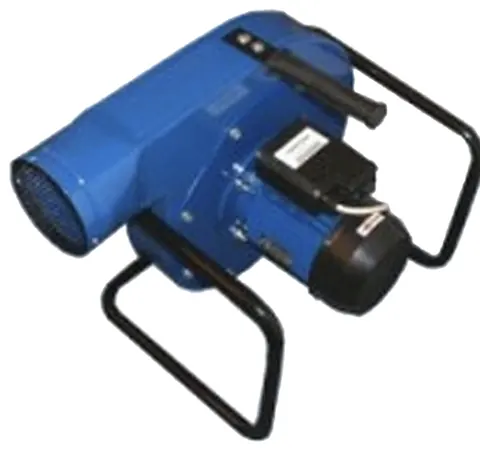 Duct sealing and extractionDuct balloons, diffuser caps and extraction
Frequently asked questions: air duct cleaning Helmond
Does EN 15780 also apply to the process extraction in a Helmond manufacturing company?
No. EN 15780 is intended for ventilation systems in buildings and not for industrial process installations. For local exhaust ventilation you look at workplace dust limit values and at a fixed test of the extraction. For the office and canteen in the same building, EN 15780 does remain the framework.
How often do you test local exhaust ventilation in a workshop in Helmond?
The British Health and Safety Executive (HSE) requires local exhaust ventilation to be thoroughly examined and tested at least every 14 months, with the report kept for 5 years. That is British regulation, but it is a useful benchmark for the maintenance plan of a facilities or maintenance team.
Which dust limit values apply in a Helmond workshop?
Volandis gives 10 mg/m³ for inert inhalable dust and 5 mg/m³ for respirable dust, as an 8 hour time weighted average. Other values may apply to specific substances such as welding fumes or wood dust. According to Volandis, good local exhaust ventilation close to the work is the basis for staying below them.
Why does Helmond have more industrial extraction than other cities?
Because 20.6% of the 11,115 establishments in Helmond are in manufacturing and energy (CBS 2024). The average across the 50 largest municipalities plus Doetinchem is 13.2%. More workshops and production areas means more local exhaust ventilation and more ducts carrying production dust.
What does the Arbobesluit say about extraction in a factory in Helmond?
Article 4.5 requires that when contaminated air is extracted, sufficient clean air is supplied at the same time. Article 6.2 requires sufficient uncontaminated air at the workplace, an installation that is always ready for use and signalling of faults where health requires it.
Which brush do you use for ducts with welding fumes or production dust in Helmond?
For stubborn dirt, Danduct's more aggressive Tynex brushes are intended, in sizes from 100 to 600 mm. You use them with a brushing machine such as the DC4. Always clean under negative pressure with an extraction fan with filtration, so the loosened dust does not end up back in the hall.
Can a maintenance team in Helmond clean workshop ducts in house?
Yes, with the right equipment and a clear plan. First make a list of all extraction points, record which dust is released at each point and schedule fixed tests and inspections. With combustible dust, agree the method with the person responsible for explosion safety before you start.
What do you do with ducts wider than 600 mm in a Helmond factory hall?
They fall outside the range of the DC4 brush set, which goes up to 600 mm. Measure the ducts, note the contamination and ask Lamers which solution is possible for the dimensions and type of contamination in your ducts. Photos of the duct interior help to give a precise answer.
Why should a Helmond company plan its hall, canteen and office separately?
Because each system has a different kind of contamination. Welding extraction needs fixed tests and a more aggressive brush, a canteen kitchen needs attention for grease, and office ventilation follows the intervals from EN 15780. Put everything on one interval and you clean one part too little and another too often.
Does Lamers have a branch in Helmond or elsewhere in Brabant?
No. Lamers Reinigingstechniek B.V. is based in Zelhem and supplies professional cleaning equipment for industrial cleaning and maintenance from there. Lamers does not clean ducts itself. Companies and facilities teams from Helmond can request a quote, ask a question or request a callback.
Sources and reference date
All facts on this page were checked on 6 October 2026.
- CBS Key figures for districts and neighbourhoods 2024 (table 85984NED, in Dutch)
- Volandis: metalworker (in Dutch)
- HSE: local exhaust ventilation FAQ
- Arbobesluit Article 4.5 (in Dutch)
- Arbobesluit Article 6.2 (in Dutch)
- Brandveilig.com: dust explosions in the woodworking industry (in Dutch)
- Danduct Clean DC4
- DIN Media: DIN EN 15780
Editorial team: Lamers Reinigingstechniek B.V., supplier of professional air duct cleaning equipment in Zelhem, the Netherlands. Updated on . See also Lamers Zelhem in practice.
Request a quote or advice from Lamers

René Hendriksen, Sales Account Manager at Lamers, advises you on the machine, brushes and extraction for your jobs.
Briefly tell us what you clean (duct type, diameter, length, contamination and sector). Lamers will contact you with advice and a tailored quote.
Prefer direct contact? Call +31 (0)314 623 341, message us on WhatsApp 06-38048347 or email info@lamersequipment.nl.
Prefer a quick call first? Lamers will call you back
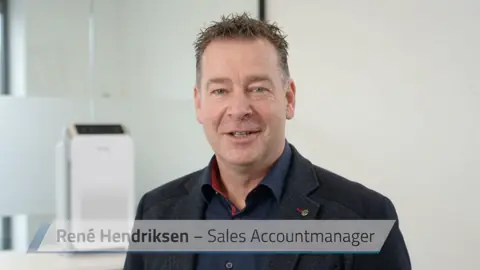
Leave your number. René Hendriksen or a colleague from Lamers will call you back to discuss duct type, diameter and the right equipment.
Or send us a message right away: WhatsApp 06-38048347