

For a facility manager or facilities team the difference matters. The law says there must be enough clean air and that the installation must always be ready for use. The standards translate that into measurable cleanliness classes, inspection intervals and working methods. Insurers and clients can refer to them in their requirements.
Below you will find, for each standard, what it contains, what its status is and what you do with it in practice. Where figures come from trade publications rather than from the standard itself, we say so.

Which standards and rules apply to clean air ducts?
The overview below puts the frameworks side by side. Pay attention to the status column: some of the well known documents have recently been replaced.
| Framework | What it covers | Status (reference date 6 October 2026) |
|---|---|---|
| EN 15780:2025 | Cleanliness of ventilation systems, assessment, cleaning method, frequency | Published July 2025, replaces EN 15780:2011 |
| VDI 6022 Part 1 (Blatt 1) | Hygiene requirements for air handling installations | Edition January 2018 |
| NVRL quality mark scheme | Cleanliness, mainly grease contamination in kitchen extraction and industry | Version of 24 June 2021, drawn up with TNO |
| Arbobesluit Art. 6.2 | Air renewal at the workplace | Statutory |
| Arbobesluit Art. 4.87b | Legionella in air humidification | Statutory |
| Bbl Art. 3.67 ff. and 4.122 ff. | Ventilation in existing buildings and new builds | Statutory; capacity for new builds via NEN 1087 |
| NEN-EN 16798-3 | Performance requirements for ventilation of non-residential buildings | 2017 version withdrawn, successor from 2025 |
| NADCA ACR 2025 | American standard for inspection, cleaning and verification | 2025 edition |
In addition, the Dutch knowledge institute ISSO published a document in 2010 on quality requirements for ductwork systems in residential and non-residential buildings, and Eurovent gives practical requirements for inspection openings and cleaning methods in recommendation REC 6/7.
EN 15780:2025: what has changed compared with 2011?
EN 15780 is the European standard for the cleanliness of ventilation systems. The revised version appeared at the end of July 2025 via the Norwegian and British standards institutes; in Germany, DIN EN 15780:2026-07 was published with 49 pages, replacing the 2012 edition.
- Scope: new and existing systems, with or without air conditioning, over their entire service life.
- Kitchen extraction: the new version extends its application to the extract systems of commercial kitchens.
- Exclusions: industrial, medical and laboratory facilities fall outside its scope, as do industrial process installations.
- Annex A: informative tables with cleanliness classes (A.1), inspection intervals per class in months (A.2), acceptable cleanliness levels (A.3) and requirements for new ducts (A.4).
According to cleaning company Hamster Cleaning, the standard for the first time contains guidance on grease thickness in commercial kitchen extraction. That is a secondary source; the exact wording can be found in the standard itself, which you can buy from NEN or another standards institute.
EN 15780 duct cleanliness classes and dust limits from trade publications
The limit values for dust on the duct wall are widely quoted, but in the sources used on this site they come from trade publications and not from the text of the standard itself. Use them as guidance and check the standard before putting them in a contract.
| Class or building type | Dust on duct wall | Source |
|---|---|---|
| Quality class low | Less than 4.5 g/m² | Hamster Cleaning, on EN 15780 |
| Quality class medium | Less than 3.0 g/m² | Hamster Cleaning, on EN 15780 |
| Quality class high | Less than 0.6 g/m² | Hamster Cleaning, on EN 15780 |
| Offices, hotels, schools (medium risk) | Less than 3.0 g/m², secondary duct up to 4.5 g/m² | Trade article by Airmec |
| Finnish indoor climate class P1 / P2 | 1.0 / 2.5 g/m² | CIB research, for comparison |
The same trade article mentions a risk assessment every two years, and every year in high risk buildings such as hospitals and laboratories. How to turn that into a schedule is explained under air duct cleaning interval. For offices, the page on ventilation in commercial buildings works this out further.
VDI 6022 ventilation hygiene: inspections of air handling
VDI 6022 Part 1 is a German guideline with hygiene requirements for the design, construction and operation of air handling installations. Its aim is air that is harmless to health. It is not Dutch law, but you can include it as a hygiene framework in a maintenance contract.
- Interval: a hygiene inspection every two years for installations with air humidification, every three years without (TÜV Süd).
- First inspection: before commissioning, after a major modification or if the installation has never been inspected (TÜV Nord).
- Content: assessment of the contamination in the ducts and microbiological testing of supply air and reference air.
- Independence: Eurofins advises keeping cleaning and the hygiene inspection separate.
In hospitals there is an additional obligation to have an air management plan for operating theatres. More on that under hospital ductwork cleaning.
NVRL quality mark and grease limits for kitchen extraction
The Dutch association of cleaning specialists for air handling systems (NVRL) drew up a quality mark scheme for the cleanliness of air handling systems together with TNO. The emphasis is on grease in the kitchen extraction of restaurants, hospitals, care homes and offices, and on industry.
| Element | NVRL quality mark scheme | EN 15780:2025 according to Hamster Cleaning |
|---|---|---|
| Action level | 500 µm of grease | Locally 500 µm or more: urgent cleaning |
| After cleaning / full clean | Maximum 200 µm | On average 200 µm or more: full cleaning |
| Measurement | Wet film thickness gauge, accuracy 20 µm | Not specified in the source |
| Samples | Behind every hood and per 10 m of duct | Not specified in the source |
| Validity | 1 year | Not applicable |
There is no statutory cleaning frequency for the hospitality sector, says KHN (Royal Dutch Hospitality Association), but fire insurers do require regular maintenance. Rabobank advises at least once a year, and twice for a restaurant with deep fryers. The practical side is covered under kitchen extract cleaning.
Legal requirements: the Arbobesluit and the Bbl
Where the standards provide measurable limits, the laws establish the duty. The key articles at a glance:
- Arbobesluit Art. 6.2: sufficient uncontaminated air at the workplace (paragraph 1), installations always ready for use (paragraph 2), signalling of faults where health requires it (paragraph 4) and a link to the Bbl (paragraph 6). Note: Article 6.4 is about keeping out sunlight, not about ventilation.
- Arbobesluit Art. 4.5: anyone extracting contaminated air must at the same time supply sufficient clean air.
- Arbobesluit Art. 4.87b: measures against legionella in air humidification, with a risk analysis and a management plan.
- Bbl Art. 3.67 to 3.73: almost every existing building has a ventilation provision that prevents damage to health.
- Bbl Art. 4.122 to 4.132: ventilation requirements for new builds, with NEN 1087 for the capacity.
- Bbl Art. 3.143: every classroom in primary, secondary and special education has a CO2 meter.
For schools, the Dutch Frisse Scholen (Fresh Schools) programme ties in with this; see fresh air in classrooms.
What do the standards say about the cleaning method itself?
Besides cleanliness limits, guidelines also set requirements for the way the work is done. Those requirements determine which equipment you need.
- Accessibility: Eurovent specifies inspection openings no more than 10 m apart or after no more than two bends of 45 degrees or more, and for ducts larger than 500 mm a hatch of at least 500 x 400 mm.
- Dry or wet: dry methods are usually sufficient for supply and general extract ducts; commercial kitchens need wet methods.
- Negative pressure: every section being cleaned is kept under continuous negative pressure, with HEPA filtration of 99.97 percent at 0.3 µm if the extraction unit exhausts indoors.
- Verification: cleanliness is demonstrated with a surface comparison or the gravimetric NADCA vacuum test.
For rotary brushing in ducts of 100 to 600 mm up to 30 m deep, electric DC4 brushing machine for cleaning contractors is the purpose built tool; for narrow ducts with bends there is the air lance with camera. Sealing and negative pressure are handled with vent caps for duct cleaning and an extraction unit. The complete overview can be found under duct cleaning equipment for cleaning contractors.
From duct cleaning standards to a maintenance plan
A standard only becomes useful once you translate it to your own building. These five steps help:
- Decide for each installation which framework leads: EN 15780 for general ventilation, VDI 6022 for air handling with hygiene requirements, NVRL for kitchen extraction.
- Choose a cleanliness class that matches how the building is used.
- Record inspection intervals and who carries out the inspections.
- Describe the working method and the verification, as in cleaning ductwork professionally.
- Archive reports, photos and measured values for the insurer and the auditor.
Not sure which machine matches your requirements? Then contact Lamers from Lamers.
Air duct cleaning equipment from Lamers at a glance
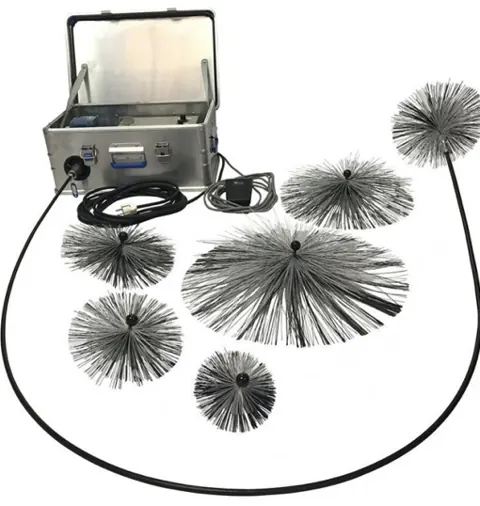 DC4 duct cleaning machineDC4: electric, up to 30 m, ducts from 100 to 600 mm
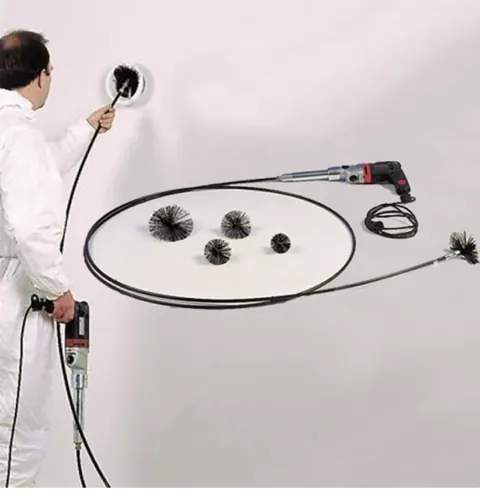 PD4 duct cleanerPD4: runs on a power drill, shaft 2.5 to 7.5 m
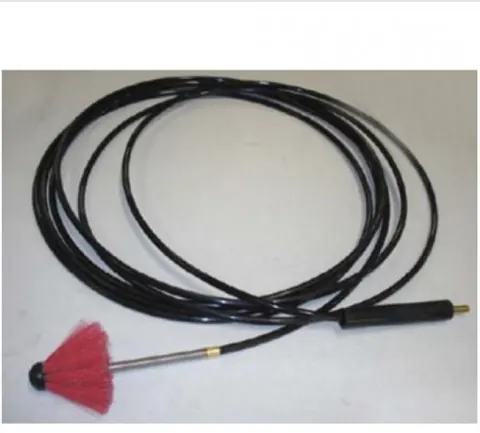 PD2 duct cleanerPD2: compact duct cleaner, specifications via Lamers
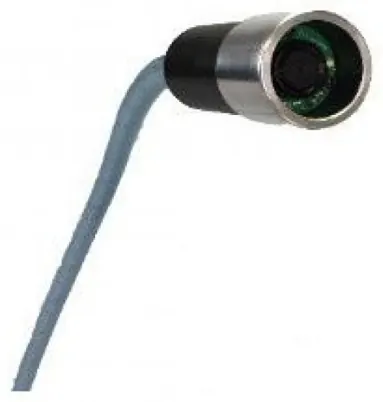 Intelligent AirnozzleCompressed air with camera, ducts from 30 mm
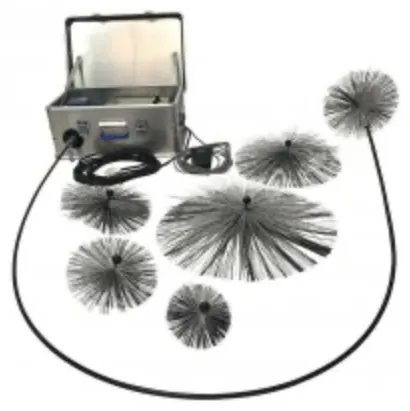 Duct cleaning brushesBrushes and shafts: soft, standard or Tynex
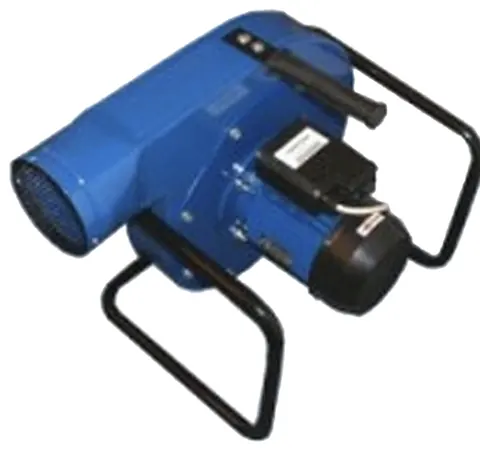 Duct sealing and extractionDuct balloons, diffuser caps and extraction
Frequently asked questions: duct cleaning standards
Is EN 15780:2025 a legal requirement for duct cleaning in the Netherlands?
The sources on this page do not mention a legal obligation to follow EN 15780. The legal basis lies in the Working Conditions Decree (Arbobesluit), with sufficient uncontaminated air and installations that are always ready for use, and in the Bbl. EN 15780 makes those requirements measurable, and insurers or clients can refer to it in contracts.
What is the main difference between EN 15780:2011 and EN 15780:2025?
The 2025 version replaces the 2011 version and extends its application to the extract systems of commercial kitchens. It applies to new and existing systems over their entire service life. Informative Annex A contains tables with cleanliness classes, inspection intervals per class in months, acceptable cleanliness levels and requirements for new ducts.
Does EN 15780 also apply to industrial, medical and laboratory ventilation?
No. According to the description from the Norwegian standards institute, EN 15780:2025 applies to ventilation systems with the exception of industrial, medical and laboratory facilities. Industrial process installations are also excluded. For hospitals you therefore also look at the guidelines for air handling in operating theatres and at VDI 6022 as a hygiene framework.
Which dust limit belongs to cleanliness class high according to trade publications?
According to cleaning company Hamster Cleaning, which summarises EN 15780, the limit for quality class high is below 0.6 g/m² of dust on the duct wall. Medium is below 3.0 g/m² and low below 4.5 g/m². These figures come from a secondary source; check them against the text of the standard before including them in a contract.
How often does VDI 6022 call for a hygiene inspection of air handling?
According to TÜV Süd, every two years for installations with air humidification and every three years for installations without humidification. A first inspection is due before commissioning, after a major modification or if the installation has never been inspected. The repeat inspection includes, among other things, an assessment of the contamination in the ducts.
What does the NVRL quality mark scheme for kitchen extraction involve?
The scheme was drawn up by the NVRL together with TNO and focuses on grease contamination. At 500 µm of grease you have to take action, and after cleaning no more than 200 µm may remain. Measurements are taken with a wet film thickness gauge, behind every extract hood and per 10 metres of duct. The quality mark is valid for one year.
Which article of the Dutch Arbobesluit covers ventilation at the workplace?
That is Article 6.2 on air renewal. It requires sufficient uncontaminated air, installations that are always ready for use and a monitoring system that signals faults where health requires it. Article 6.4 is sometimes mentioned, but it concerns keeping out sunlight and therefore has nothing to do with ventilation.
At what grease layer thickness must an extract duct be cleaned according to the NVRL?
The NVRL quality mark scheme gives 500 µm as the action level. After cleaning, the grease layer may be no more than 200 µm. Hamster Cleaning describes comparable values for EN 15780:2025: on average 200 µm or more means full cleaning, locally 500 µm or more means urgent cleaning. A report with measurements before and after helps when dealing with the insurer.
Why do inspectors advise separating duct cleaning from the hygiene inspection?
Whoever does the cleaning is judging their own work. Eurofins therefore advises carrying out the VDI 6022 hygiene inspection separately from the cleaning, for an objective verdict. For a facilities team that cleans in house, this means having the final check or a sample inspection done by an external, independent inspector.
Which standard determines ventilation capacity for new builds under the Bbl?
For new builds, ventilation capacity under the Building Works Living Environment Decree is determined with NEN 1087, according to the Dutch government information point IPLO. The requirements themselves are in Article 4.122 onwards of the Bbl. For existing buildings, Articles 3.67 to 3.73 apply, which require a ventilation provision that prevents damage to health.
Sources and reference date
All facts on this page were checked on 6 October 2026.
- Standard Norge: NS-EN 15780:2025
- DIN Media: DIN EN 15780:2026-07 (in German)
- Hamster Cleaning: a revised European standard (in Dutch)
- TÜV Süd: VDI 6022 hygiene inspections (in German)
- NVRL quality mark scheme for cleanliness, PDF (in Dutch)
- Working Conditions Decree (Arbobesluit) Article 6.2 (in Dutch)
- IPLO: ventilation in new builds under the Bbl (in Dutch)
- Eurovent REC 6/7
Editorial team: Lamers Reinigingstechniek B.V., supplier of professional air duct cleaning equipment in Zelhem, the Netherlands. Updated on . See also the family business Lamers for cleaning contractors.
Request a quote or advice from Lamers

René Hendriksen, Sales Account Manager at Lamers, advises you on the machine, brushes and extraction for your jobs.
Briefly tell us what you clean (duct type, diameter, length, contamination and sector). Lamers will contact you with advice and a tailored quote.
Prefer direct contact? Call +31 (0)314 623 341, message us on WhatsApp 06-38048347 or email info@lamersequipment.nl.
Prefer a quick call first? Lamers will call you back

Leave your number. René Hendriksen or a colleague from Lamers will call you back to discuss duct type, diameter and the right equipment.
Or send us a message right away: WhatsApp 06-38048347