

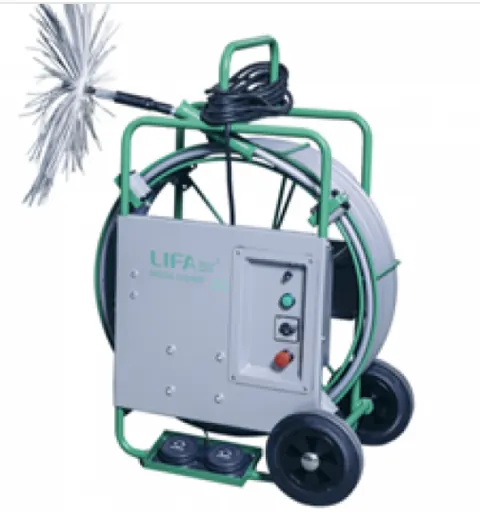
This guide is written for cleaning contractors, installers and facilities teams who plan or carry out such a complete job themselves. You will read which components are involved, how to arrange access through inspection hatches, in which order you work in practice, which references from standards you can use and which equipment suits which part of the system.
Figures come from verified sources (reference date 6 October 2026); practical advice is marked as such. Lamers Reinigingstechniek in Zelhem, the Netherlands, supplies the equipment; the cleaning itself is done by you.

Ventilation system cleaning: which components are involved?
A central system in a commercial building has more parts than a residential unit, and each part needs its own approach. Use this overview for your scope of work.
| Component | Typical contamination | Approach in practice |
|---|---|---|
| Air handling unit (AHU) | Dust on walls, fan and floor; moisture with cooling or humidification | Vacuum and wipe by hand, dismantle parts where needed |
| Filters | Captured dust, fine particles, pollen | Replace, do not beat out or blow clean |
| Supply ducts | Dust that slips past the filter, construction dust | Rotating brush or compressed air, under negative pressure |
| Extract ducts | Dust and fibres from the room | Rotating brush, long runs in sections |
| Dampers and silencers | Dust building up behind blades and in silencer lining | Make accessible through hatches on both sides, clean carefully |
| Heat recovery wheel or coil | Dust in fins or channels | Follow the instructions of the installation manufacturer |
| Grilles and valves | Visible dust edges | Remove, clean, note the setting and refit |
If you mainly work in homes or small buildings with a ventilation box, the approach is simpler. That is covered in the guide on cleaning MEV systems. For balanced ventilation with a heat exchanger, see the guide on cleaning a heat recovery system.
Air handling unit cleaning: the heart of the system
The AHU draws in outside air, filters it, heats or cools it and blows it into the building. Anything left behind here travels along with the air. That is why a good inspection starts at the unit.
- Filter section: check that filters seal properly in their frames. A poorly fitting filter lets dust pass alongside it, straight into the ducts.
- Fan section: dust on the blades and the floor is a sign that dirt has been passing through for some time.
- Cooling and humidification section: moisture plus dust is a breeding ground. The RIVM (Dutch National Institute for Public Health) names humidifiers and central air humidification as possible sources in its legionellosis guideline. Employers using air humidification must take measures under article 4.87b of the Working Conditions Decree (Arbobesluit), with a risk analysis and a management plan.
- Heat recovery: a wheel or coil with dense fins holds on to dust. Follow the cleaning instructions of the installation manufacturer.
Milieu Centraal (Dutch public information centre) points out that dirty filters can let moulds and bacteria be blown into the building and that a dirty filter creates more resistance. The biggest risk is underventilation: less fresh air than the system was designed for.
Inspection hatches: no access means no clean ventilation system
You can only clean what you can reach. The Eurovent recommendation REC 6/7 (1999) gives useful dimensions that many professionals still use as a reference:
- inspection openings no more than 10 metres apart, or no more than two bends of 45 degrees or more between two openings;
- for ducts larger than 500 mm, a hatch of at least 500 x 400 mm;
- openings on both sides of dampers, coils, heat recovery, silencers, filters and fans.
If those hatches are missing, fitting extra resealable inspection hatches is often the first step. Danduct Clean supplies resealable inspection hatches and small access doors as accessories. A practical tip: on the first round, mark the position of each hatch on the drawing. On every later cleaning you will save search time.
The number of hatches also determines your choice of equipment. With a 30 metre shaft, DC4 duct cleaner bridges a long stretch of duct between two openings, including vertical sections and 90 degree bends, in ducts from 100 to 600 mm.
In which order do you clean a complete ventilation system?
Practical advice, not a requirement of any standard. No standard prescribes a fixed order. The method below is a logical sequence that stops loose dirt ending up in sections you have already cleaned. Always adapt it to the system in front of you.
- Survey: record the drawing, hatch positions, duct sizes, duct material and the number of grilles and valves.
- Baseline and photos: camera footage or photos per section, so you can compare afterwards.
- Switch off and lock out the installation: and note the grille settings before you remove anything.
- Seal and create negative pressure: seal off the section to be cleaned and keep it under continuous negative pressure with an extraction unit, using duct sealing balloon to protect the rest of the system.
- Clean ducts section by section: work towards your extraction point, so loose dirt moves to the extraction and not back into clean sections.
- AHU, dampers and silencers: finish by hand, including the floor and the fan section.
- Grilles and valves: clean them and refit them in the recorded setting.
- Replace filters last: a new filter that catches all the dust from the cleaning is money thrown away.
- Final check and report: after measurement, photos and job sheet.
More background on permitted methods and measuring methods can be found under duct cleaning standards.
Which equipment suits each part of the ventilation system?
A system in a commercial building often has main ducts, branches and small end ducts leading to valves. No single machine fits all of these perfectly. So look at the full range of air duct cleaning tools and choose per duct type.
| Situation in the system | Suitable equipment | Note |
|---|---|---|
| Main and distribution ducts 100 to 600 mm, long runs | DC4 with shaft up to 30 m | Choose a brush set per diameter |
| Short end ducts to valves | PD4 on a power drill, shaft 2.5 to 7.5 m | Light and quick to set up |
| Narrow ducts from 30 mm, tight bends | Intelligent Airnozzle with camera | Compressor of 700 L/min or more at about 10 bar |
| Ducts larger than 600 mm | Outside the DC4 range; for comparison: LIFA AIR CombiCleaner 40 for 400 to 1200 mm | Ask for advice on a suitable solution |
| Sealing and removing dirt | Balloons, foam caps, extraction unit | HEPA if you exhaust indoors |
For short end ducts, duct cleaning with a power drill is often faster than setting up a large machine. In narrow ducts with many bends, the Intelligent Airnozzle shows you on camera straight away whether a corner is clean. Take care with fibreglass duct board: the EPA recommends soft brushes there.
How often do you inspect a ventilation system in a commercial building?
There is no statutory cleaning interval for offices and commercial buildings in the Netherlands. Article 6.2 of the Working Conditions Decree (Arbobesluit) does require ventilation installations to be in working order at all times and the workplace to have enough uncontaminated air. For planning, you therefore rely on references:
| Reference | What it says | Status |
|---|---|---|
| VDI 6022 Part 1 (Germany) | Hygiene inspection every 2 years with humidification, every 3 years without | German guideline, usable as a reference |
| EN 15780:2025 | Cleanliness classes and inspection intervals per class in Annex A | European standard, not law; not for industrial processes |
| Trade publication (modbs.co.uk) | Risk assessment every 2 years, annually in high risk buildings | Secondary source |
Inspection is not the same as cleaning: you only clean when the inspection shows it is needed. A practical route is a fixed inspection cycle with camera and measurement, and cleaning per section based on the outcome. More on intervals can be found under the interval for ventilation duct cleaning. For the situation in offices there is a separate guide on ventilation in commercial buildings.
Suppliers of air handling units or of cleaning equipment?
Anyone searching for suppliers of air handling units will find manufacturers and wholesalers who make and sell the AHU itself. That is a different market from cleaning equipment. The AHU manufacturer supplies the unit, the maintenance instructions and often the filters. A supplier of cleaning equipment supplies the brushing machines, compressed air nozzles, sealing products and extraction units you use to clean the unit and the ducts.
- Questions about replacement parts, filter sizes or the maintenance instructions for the unit go to the installation manufacturer.
- Questions about which machine fits which duct diameter go to a duct cleaning equipment supplier.
- Questions about the cleaning instructions for a heat recovery wheel or coil: consult the AHU manufacturer's documentation first.
Lamers Reinigingstechniek belongs to the second group: the family business has supplied professional cleaning equipment for more than 50 years, including the Danduct Clean machines for air ducts.
Cleaning ventilation systems alongside workshop extraction
Many commercial buildings have a separate process or dust extraction installation next to the comfort ventilation. These are two different systems with different risks: with dust extraction, combustible dust plays a role; with comfort ventilation, the main issues are hygiene and air volume. List them separately in your scope of work. For the second group there is the guide on cleaning workshop extraction systems.
Fictional example: the facilities team of a three storey office building plans the cleaning floor by floor, each time on a Friday afternoon. Per section the valves are closed with foam caps, the section is put under negative pressure and the main ducts are done with a rotating brush. The short branches are handled with a drill driven cleaner. Only after the last floor does the AHU get new filters.
A short checklist before you start a job like this:
- Is the drawing up to date and are all hatches marked?
- Do you know the diameter and material of every duct type?
- Have you agreed with the client when the installation may be switched off?
- Are the filters for the final replacement ready on site?
Want to know which set suits your work? Use the form to duct cleaner quotation or advice on the right machine.
Air duct cleaning equipment from Lamers at a glance
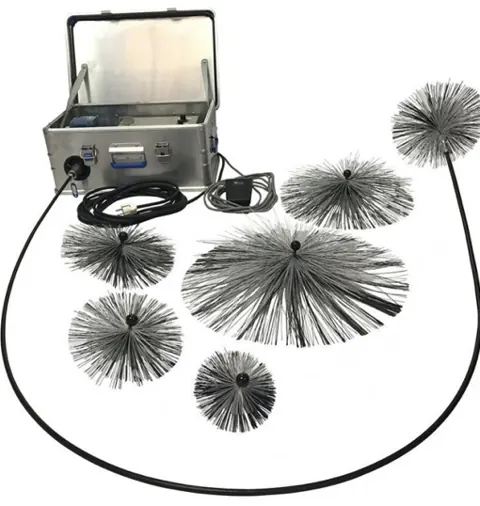 DC4 duct cleaning machineDC4: electric, up to 30 m, ducts from 100 to 600 mm
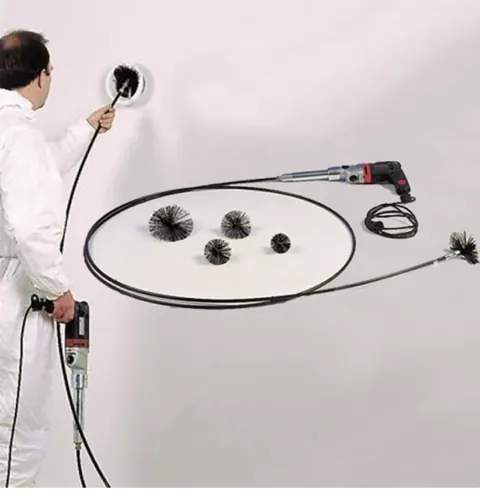 PD4 duct cleanerPD4: runs on a power drill, shaft 2.5 to 7.5 m
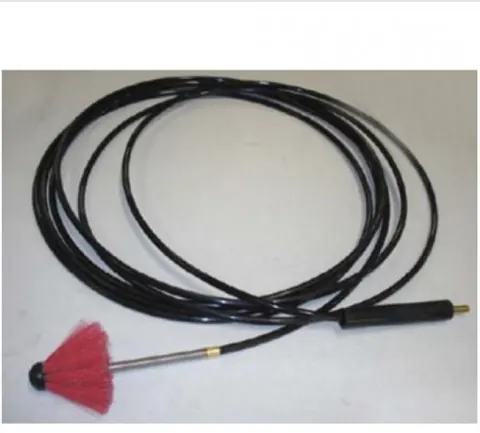 PD2 duct cleanerPD2: compact duct cleaner, specifications via Lamers
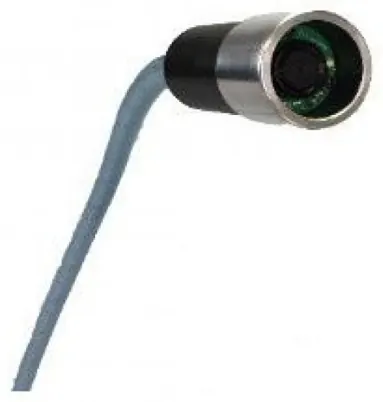 Intelligent AirnozzleCompressed air with camera, ducts from 30 mm
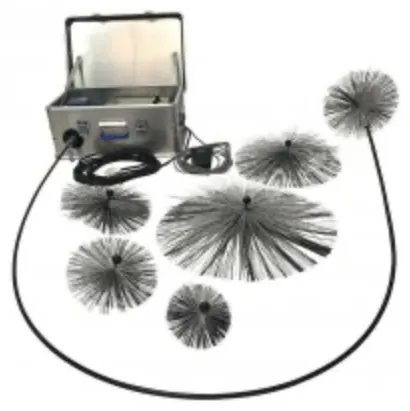 Duct cleaning brushesBrushes and shafts: soft, standard or Tynex
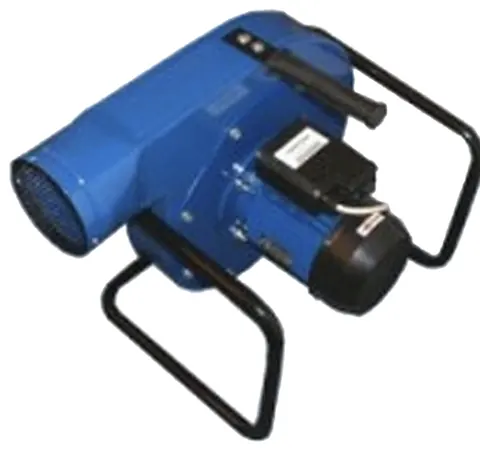 Duct sealing and extractionDuct balloons, diffuser caps and extraction
Frequently asked questions: ventilation system cleaning
Which components do you include when you clean a ventilation system in a commercial building?
Include the air handling unit, the filters, supply and extract ducts, dampers, silencers, the heat recovery wheel or coil and all grilles and valves. Every component collects dirt. If you only clean the ducts and leave a dirty AHU or old filters in place, the ducts will soon be contaminated again.
How far apart may inspection hatches in a ventilation system be?
According to the Eurovent recommendation REC 6/7, no more than 10 metres, or with no more than two bends of 45 degrees or more between them. Ducts larger than 500 mm need a hatch of at least 500 x 400 mm. Also fit openings on both sides of dampers, silencers, filters, coils and fans.
Is a supplier of air handling units the same as a supplier of cleaning equipment?
No. Suppliers of air handling units make or sell the unit itself, with filters and parts. Suppliers of cleaning equipment provide machines, brushes, sealing products and extraction units for cleaning the unit and ducts. For parts of the unit you go to the manufacturer, for cleaning equipment to a supplier such as Lamers.
In which order do you clean an air handling unit and its ducts?
No standard prescribes the order. Practical advice: survey and take photos first, switch off the installation, seal the section and put it under negative pressure, clean the ducts towards the extraction point, then finish the AHU, dampers and grilles. Replace the filters last, so they do not fill up with dust from the cleaning.
How often should an air handling installation be inspected under VDI 6022?
The German guideline VDI 6022 Part 1 specifies a hygiene inspection every 2 years for installations with humidification and every 3 years for those without. In the Netherlands this guideline is not a legal requirement, but many facilities teams and cleaning contractors use it as a reference for an inspection schedule.
Why do you replace the filters only after cleaning the ventilation system?
A lot of dust comes loose during cleaning. Despite sealing and negative pressure, some of it can end up in the filter section. If you fit the new filters beforehand, they will be clogged straight away. So replace them at the end. This is practical advice; always follow the installation manufacturer's instructions as well.
What happens to the air volume when filters in a ventilation system are dirty?
Dirty filters create more resistance. In a laboratory study of a heat recovery unit (Energies, 2025), heavily contaminated filters delivered 37% less supply air. Power consumption even fell slightly, because the airflow dropped. The real problem is therefore underventilation: less fresh air comes in than the system was designed for.
Which machine do you use for the main ducts of an office ventilation system?
For round or rectangular ducts from 100 to 600 mm, the Danduct Clean DC4 is a logical choice: a shaft up to 30 metres, also through vertical sections and 90 degree bends. For short branches, a PD4 on a power drill works well. Ducts larger than 600 mm are outside the range of the DC4.
Should humidification be handled separately when cleaning a ventilation system?
Yes, list it separately. The RIVM names humidifiers and central air humidification as a possible source of legionella. Article 4.87b of the Working Conditions Decree (Arbobesluit) requires employers with humidification installations to take measures, with a risk analysis and management plan. VDI 6022 also uses a shorter inspection interval for installations with humidification.
How do you prove that a ventilation system is really clean after cleaning?
Record before and after photos or camera footage per section. For a measurable result there are methods such as surface comparison or the gravimetric NADCA vacuum test. Advice from hygiene inspection practice is to have cleaning and inspection carried out by different parties, so the assessment stays objective.
Sources and reference date
All facts on this page were checked on 6 October 2026.
- Eurovent REC 6/7 Cleanliness of ductwork
- TÜV SÜD: VDI 6022 hygiene inspections (in German)
- Working Conditions Decree (Arbobesluit) article 6.2 (in Dutch)
- Milieu Centraal: balanced ventilation (in Dutch)
- Energies 2025: filter contamination in a heat recovery unit
- RIVM LCI guideline on legionellosis (in Dutch)
- UMD Facilities: duct cleaning specifications
- Danduct Clean: DC4
Editorial team: Lamers Reinigingstechniek B.V., supplier of professional air duct cleaning equipment in Zelhem, the Netherlands. Updated on . See also Lamers Reinigingstechniek.
Request a quote or advice from Lamers

René Hendriksen, Sales Account Manager at Lamers, advises you on the machine, brushes and extraction for your jobs.
Briefly tell us what you clean (duct type, diameter, length, contamination and sector). Lamers will contact you with advice and a tailored quote.
Prefer direct contact? Call +31 (0)314 623 341, message us on WhatsApp 06-38048347 or email info@lamersequipment.nl.
Prefer a quick call first? Lamers will call you back

Leave your number. René Hendriksen or a colleague from Lamers will call you back to discuss duct type, diameter and the right equipment.
Or send us a message right away: WhatsApp 06-38048347