

Together that is 9,130 establishments, almost a third of the total. These groups include restaurant kitchens, canteens, bakeries and food processing companies: exactly the places where an extract duct collects not only dust but also grease or flour dust. That makes maintenance a matter of fire safety and hygiene, not just comfort.
Below you will read how to match the cleaning frequency to the use of the kitchen, what bakeries and the food sector pay attention to, which brushes and machines fit and how to make the work verifiable for insurer and auditor. Lamers Reinigingstechniek in Zelhem supplies the equipment.

Duct cleaning Tilburg in figures: where is the grease?
| Sector (CBS 2024) | Establishments | Share | Typical contamination |
|---|---|---|---|
| Business services | 6,775 | 24.2% | dry dust |
| Trade and hospitality | 4,945 | 17.7% | grease from kitchens, dust in shops |
| Government, education and care | 4,825 | 17.3% | dust, sometimes grease from large kitchens |
| Manufacturing and energy | 4,185 | 15.0% | production dust, flour, shavings |
| Culture, recreation and other services | 3,750 | 13.4% | moisture, dust |
| Transport, information and communication | 2,115 | 7.6% | dry dust |
The CBS sector classification does not say how many companies have a commercial kitchen or a production line. So use these figures as a direction: in Tilburg your kit needs to handle grease and fine production dust as well as dry dust.
For a cleaning contractor this has a practical consequence for the van. Next to the soft and standard brushes for office ducts, keep a set of more aggressive brushes, degreaser and a spare extraction filter on board, so a kitchen or bakery job can be done in the same round.
Matching the cleaning frequency to the use of the kitchen
There is no statutory frequency for hospitality, confirms KHN (Royal Dutch Hospitality Association). Fire insurers do require regular maintenance. In British practice the frequency is linked to the number of hours the kitchen is in operation:
| Use per day | Interval | Example (fictitious) |
|---|---|---|
| Heavy, 12 to 16 hours | every 3 months | grill restaurant with long opening hours |
| Moderate, 6 to 12 hours | every 6 months | lunch and dinner restaurant |
| Light, 2 to 6 hours | every 12 months | company canteen |
Dutch sources are in the same range. KHN names at least once a year, more often with grill, fryer or wok. Rabobank advises twice a year for a fried food restaurant. In its prevention conditions, the insurer Goudse asks for grease filters to be cleaned or replaced weekly and for the exhaust duct to be inspected annually. More detail under kitchen extract duct cleaning for cleaning contractors.
A simple way to apply the table: ask the kitchen for its opening hours per day, place it in the right row and agree the interval with the client and the insurer. Then check after the first clean whether the measured grease layer confirms that choice.
How much grease may there be in an extract duct?
Insurers and auditors want a number. Two sources give the same picture:
- The NVRL quality mark scheme, drawn up with TNO, uses an intervention value of 500 µm and a performance value after cleaning of a maximum of 200 µm.
- According to trade publications on EN 15780:2025, the new standard contains guidelines for commercial kitchen extraction for the first time, with an average of 200 µm as the limit for full cleaning and locally 500 µm for urgent cleaning.
Measurement is done with a wet film thickness gauge: a sample behind every extraction hood and per 10 metres of duct. Goudse also requires rigid, non flexible and non ribbed ductwork of aluminium or steel. Ribbed hose is also hard to clean, so in practice that is a double argument.
Bakeries: flour dust calls for a different approach
In a bakery the problem is not grease but flour dust. The Health Council of the Netherlands (Gezondheidsraad) advises 0.2 mg/m³ of inhalable wheat flour dust as a health based value, which is advice and not a legal limit. In Belgium a limit value of 0.5 mg/m³ per 8 hours applies.
The most important rule for cleaning: no compressed air, no hand brushes, no brooms. Those actually blow the dust around. Use an industrial vacuum cleaner with HEPA or at least an M class filter. In EX zones an ATEX 114 certified vacuum cleaner is needed, because flour dust can explode above 60 g/m³. Continue reading under air duct cleaning in bakeries.
For the planning this means that bakery ducts are best cleaned when production is stopped and the flour in the air has settled, with the extraction unit running throughout so nothing that comes loose ends up on the work surfaces.
Food processing: avoiding airflows from dirty to clean
For food processing companies, the Netherlands Food and Consumer Product Safety Authority (NVWA) looks at air handling when granting approvals. From the verification list: avoid airflows from contaminated to clean rooms, make filters and components that need regular cleaning easily accessible, and design ceilings and fittings so that dirt, condensation, mould and loose particles are kept to a minimum.
The BRCGS guide on air quality in food production helps with the choice of supply air category and filtration, with Eurovent 4/23 as its basis. A dirty duct can undermine that entire zoning. More under air duct cleaning in the food industry.
Which brush and machine for grease and production dust?
Grease and caked on dust call for more mechanical force than loose dust in an office duct. Danduct has three brush types: soft, standard and the more aggressive Tynex, all from 100 to 600 mm. For kitchen ducts with a hard grease layer you would rather choose Tynex, for vulnerable ducts soft. A selection guide is available under brushes for air ducts for cleaning contractors.
For the drive, the DC4 duct cleaning machine for businesses is a logical basis: up to 30 metres of reach, also vertical and through 90 degree bends. For kitchens with grease, Eurovent recommends a wet method; Danduct offers a spraying system for the DC4. The complete range is under compare duct cleaning kits for businesses.
| Situation | Advice | Source |
|---|---|---|
| Hard grease layer in kitchen ducts | Tynex brush plus a wet method | Danduct, Eurovent |
| Vulnerable ducts | Soft brush | Danduct |
| Flour dust in bakeries | No compressed air, industrial vacuum cleaner with HEPA or M class filter | Alimento, TNO |
Ventilation duct cleaning Tilburg and Central Brabant
Tilburg lies between two other Brabant cities on this site. Breda has 28,900 establishments: see air duct cleaning in Breda. Eindhoven has 32,980: see duct cleaning equipment in Eindhoven.
For all municipalities in a row, look at air duct cleaning by city. In doubt about which brushes and machine suit the Tilburg kitchens or production areas where you work? Then contact Lamers for cleaning contractors for advice or a quote.
Air duct cleaning equipment from Lamers at a glance
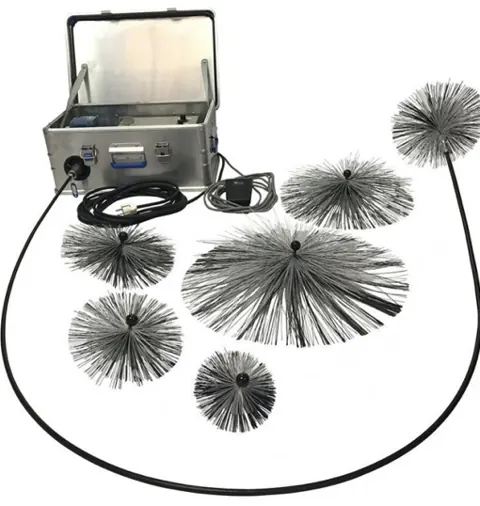 DC4 duct cleaning machineDC4: electric, up to 30 m, ducts from 100 to 600 mm
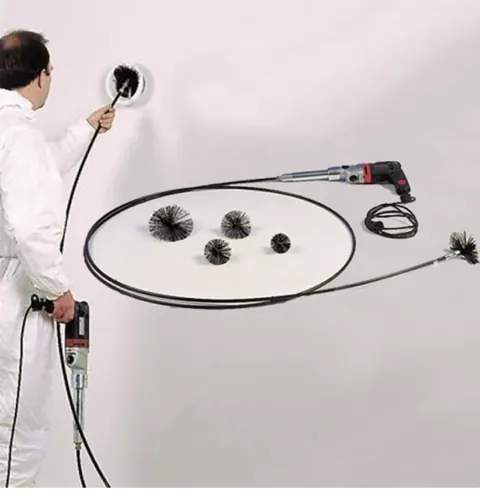 PD4 duct cleanerPD4: runs on a power drill, shaft 2.5 to 7.5 m
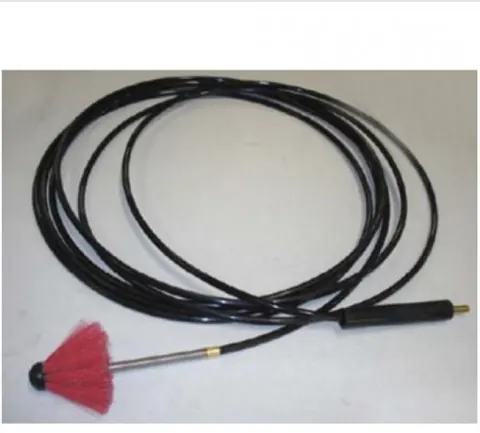 PD2 duct cleanerPD2: compact duct cleaner, specifications via Lamers
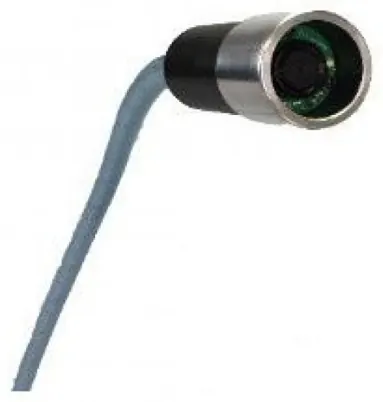 Intelligent AirnozzleCompressed air with camera, ducts from 30 mm
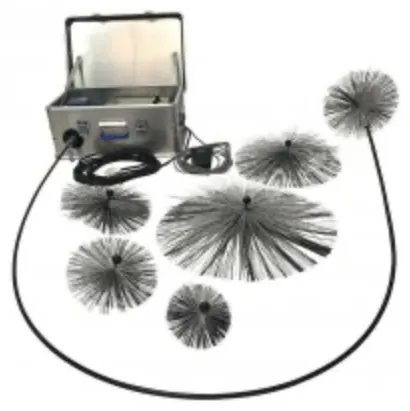 Duct cleaning brushesBrushes and shafts: soft, standard or Tynex
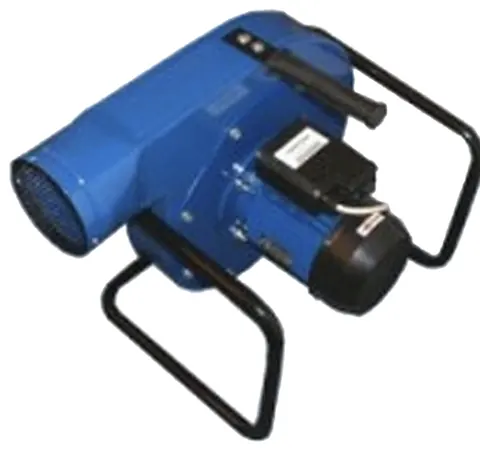 Duct sealing and extractionDuct balloons, diffuser caps and extraction
Frequently asked questions: air duct cleaning Tilburg
Why is kitchen extraction such an important topic in Tilburg?
According to CBS 2024, 17.7% of Tilburg establishments are in trade and hospitality, the highest share among the seven largest municipalities. Every commercial kitchen has an extract duct where grease builds up. Grease is highly flammable and, according to Rabobank, most hospitality fires start in the kitchen.
How often should a Tilburg grill restaurant clean its extract duct?
There is no statutory frequency. In British practice, heavy use of 12 to 16 hours a day means an interval of 3 months. KHN names at least once a year, and more often with grill, fryer or wok. Set the interval together with your insurer and on the basis of measured grease layer thicknesses.
What grease layer thickness is acceptable in a Tilburg commercial kitchen?
According to the NVRL quality mark scheme, you intervene at 500 µm and a maximum of 200 µm may remain after cleaning. Trade publications on EN 15780:2025 name the same order of magnitude: an average of 200 µm for full cleaning and locally 500 µm for urgent cleaning. You measure with a wet film thickness gauge.
Can you blow ducts clean with compressed air in a Tilburg bakery?
No, that is advised against. Compressed air, hand brushes and brooms actually blow flour dust around. Use an industrial vacuum cleaner with HEPA or at least an M class filter. In EX zones an ATEX 114 certified vacuum cleaner is needed, because fine dust such as flour and sugar can explode above 60 g/m³.
Which brush do you choose for greasy ducts in Tilburg hospitality?
For a hard grease layer, a more aggressive Tynex brush is the obvious choice. Danduct supplies soft, standard and Tynex brushes from 100 to 600 mm. For grease, Eurovent also advises a wet method instead of dry brushing alone. A spraying system is available for the DC4 for this purpose.
What does an insurer require from a Tilburg restaurant for its extraction?
That differs per insurer. The Goudse prevention conditions, for example, ask for grease filters to be cleaned or replaced weekly, the exhaust duct and motor to be inspected annually and cleaned by a specialist where necessary, and rigid ductwork of aluminium or steel. KHN advises a report with photos and a certificate.
What does the NVWA look for in the air ducts of a Tilburg food company?
In an approval application, the NVWA checks among other things whether airflows from contaminated to clean rooms are avoided, whether filters and parts that need frequent cleaning are easily accessible, and whether dirt, condensation and mould at ceilings and fittings are kept to a minimum. Clean ducts are directly part of that.
How many production companies in Tilburg have extract ducts?
That number is not known. In 2024 CBS counted 4,185 Tilburg establishments in manufacturing and energy, 15.0% of the total. Not every establishment has process extraction, but in this sector you see extraction at source and production dust more often, with its own risks such as dust explosions.
Is the DC4 suitable for kitchen ducts in Tilburg?
The DC4 cleans round and square ducts of 100 to 600 mm up to 30 metres, also vertically and through 90 degree bends. For greasy kitchen ducts you combine it with a suitable brush and possibly the DC4 spraying system. Ask Lamers which configuration suits the grease contamination you meet in Tilburg kitchens.
Where can you buy air duct cleaning equipment near Tilburg?
Lamers Reinigingstechniek is not in Tilburg but in Zelhem, in the Achterhoek region. The family business has supplied professional cleaning equipment for more than 50 years and works internationally. You can request a quote online, request a callback or ask a question about the right machine and brushes.
Sources and reference date
All facts on this page were checked on 6 October 2026.
- Statistics Netherlands (CBS): key figures for districts and neighbourhoods 2024, table 85984NED (in Dutch)
- KHN: odour nuisance, fire hazard and wood burning ban (in Dutch)
- Brodex Trident: requirements for cleaning kitchen extraction
- Goudse: prevention conditions for hospitality (in Dutch)
- NVRL/TNO: quality mark scheme for cleanliness (in Dutch)
- Alimento: flour dust in bakeries (in Dutch)
- NVWA: verification list for new approval (in Dutch)
- Hamster Cleaning: revised European standard EN 15780 (in Dutch)
Editorial team: Lamers Reinigingstechniek B.V., supplier of professional air duct cleaning equipment in Zelhem, the Netherlands. Updated on . See also the family business Lamers for businesses.
Request a quote or advice from Lamers

René Hendriksen, Sales Account Manager at Lamers, advises you on the machine, brushes and extraction for your jobs.
Briefly tell us what you clean (duct type, diameter, length, contamination and sector). Lamers will contact you with advice and a tailored quote.
Prefer direct contact? Call +31 (0)314 623 341, message us on WhatsApp 06-38048347 or email info@lamersequipment.nl.
Prefer a quick call first? Lamers will call you back

Leave your number. René Hendriksen or a colleague from Lamers will call you back to discuss duct type, diameter and the right equipment.
Or send us a message right away: WhatsApp 06-38048347