

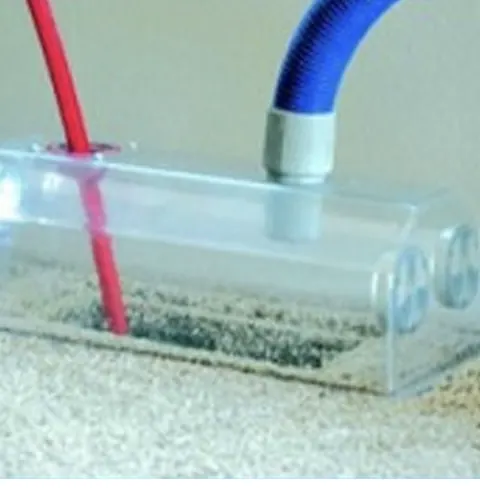
Grease sticks to the inside of the duct. During flambéing or a pan fire it can catch fire. According to Rabobank, most hospitality fires start in the kitchen, with the extraction installation as a major culprit.
On this page you will read how often to clean, how to measure the grease layer, what insurers ask for and which equipment from Lamers Reinigingstechniek fits if you do this work with your own team or as a cleaning contractor.

How often should kitchen extract cleaning take place?
Several sources give a direction. They differ in detail, but they say the same thing: the more intensively you cook, the more often.
| Source | Advice | Note |
|---|---|---|
| KHN | At least once a year, more often with grill, fryer or wok | No statutory frequency |
| Rabobank | At least once a year professionally, twice for a fried food restaurant | Insurer's perspective |
| Goudse prevention conditions | Grease filters weekly, inspect duct and motor yearly | Cleaning by a specialist where necessary |
| British practice (Brodex Trident) | Heavy use of 12 to 16 hours a day every 3 months, moderate every 6, light every 12 | For comparison |
Look at your own kitchen. A lunchroom with a toastie maker is in a different category from a snack bar with three fryers running from eleven in the morning to eleven at night. Also check your own policy: the conditions of your insurer take precedence. More on intervals in other buildings under how often should air ducts be cleaned.
When is a cooker hood duct too greasy? Measuring in microns
You cannot judge a duct by looking into the hood alone. KHN points out that serious contamination is often not visible to the naked eye. That is why grease is measured in micrometres (µm).
The quality mark scheme of the NVRL, the Dutch association of air handling system cleaning specialists, drawn up with TNO, works with two values:
- Intervention value 500 µm: above this grease layer you must clean.
- Performance value 200 µm: after cleaning, no more than this may remain.
Measurement is done with a wet film thickness gauge, with an accuracy of 20 µm. A sample is taken behind every extraction hood and per 10 metres of duct. The quality mark is valid for 1 year if the limit values are met.
According to trade publications, the new EN 15780:2025 also covers commercial kitchen extraction for the first time, with comparable grease thicknesses. For the text of the standard and the background, see NVRL quality mark.
What do insurers ask for when you clean an extract system?
Fire insurers require regular maintenance, and after a fire the loss adjuster wants to see that you have done it. KHN names three things that show your duct is clean: a report, photos and a certificate.
What belongs in the file
- Date and scope of the cleaning: which hoods, which duct length, fan and motor.
- Grease measurements before and after, per measuring point.
- Photos of the same spots before and after.
- Spots that were not accessible, with a proposal for an extra hatch.
- A certificate or statement from whoever did the cleaning.
In its prevention conditions, Goudse also sets requirements for the ductwork: rigid, not flexible and not ribbed, made of aluminium or steel. A ribbed flexible hose holds on to grease and is hardly possible to clean. If you come across such a section, advise the client to replace it.
Why dry brushing in a commercial kitchen is not always enough
For ordinary supply and exhaust, dry methods are usually sufficient. The Eurovent recommendation on duct cleanliness, however, states that wet methods are needed for commercial kitchen exhaust. Grease is sticky and smears if you only go over it with a dry brush.
In practice you therefore work in stages: first grease filters and hood, then soak or spray the duct with a degreaser, then clean mechanically and extract. Danduct supplies a spraying system for the DC4, the DC4 Sprayer System. Ask Lamers whether it suits your cleaning agent and duct.
| Component | Method | Who |
|---|---|---|
| Grease filters | Wash or replace | Own staff, weekly |
| Inside of the extraction hood | Degrease and wipe down | Own staff |
| Horizontal and vertical duct | Degrease, brush, extract | Specialist or trained facilities team |
| Fan and motor | Inspect and clean | Specialist |
A useful habit for contractors: agree with the kitchen on a fixed moment for the work, after closing time, so the degreaser has time to soak in and the kitchen is dry and ready again before the next service.
Equipment for removing grease from kitchen extract ducts
A hospitality duct is often short, with sharp bends and a vertical section to the roof. That calls for a machine that can handle bends and a brush that loosens grease.
- The Electric duct brushing machine for cleaning contractors works in round and square ducts of 100 to 600 mm, goes vertical and through 90 degree bends and reaches up to 30 metres.
- For baked on grease there are more aggressive Tynex brushes. The page on duct cleaning brushes for cleaning contractors explains which brush suits which kind of contamination.
- With compressed air duct cleaning for cleaning contractors you look inside the duct via the camera. Useful for seeing beforehand where the grease is and showing afterwards that it has gone.
For a comparison of all kits, also for those who do several kitchens a week, look at duct cleaning kit for cleaning contractors.
Fictitious example: a grill restaurant after the insurance inspection
After an inspection by its insurer, a grill restaurant is asked for a cleaning report for the extract duct. There is none: the grease filters are washed weekly, but the duct has never been cleaned.
A camera inspection shows that the vertical section just behind the hood is the greasiest. That is where grease condenses first, because the air cools down. Further along the duct the layer is thinner. After cleaning, the report shows the before and after value per measuring point, with photos. From now on the owner schedules two cleans a year, because the grill runs for long hours every day.
What you learn from this: washing filters weekly is necessary, but it does not replace duct cleaning. Hotels with their own restaurant kitchen face the same question; see air duct cleaning in hotels. To find out what such a job typically costs, look at air duct cleaning prices.
A short checklist you can hand to a restaurant client: weekly filter washing logged, yearly duct inspection booked, report with grease values and photos filed with the insurance papers, and any flexible ribbed sections flagged for replacement.
Air duct cleaning equipment from Lamers at a glance
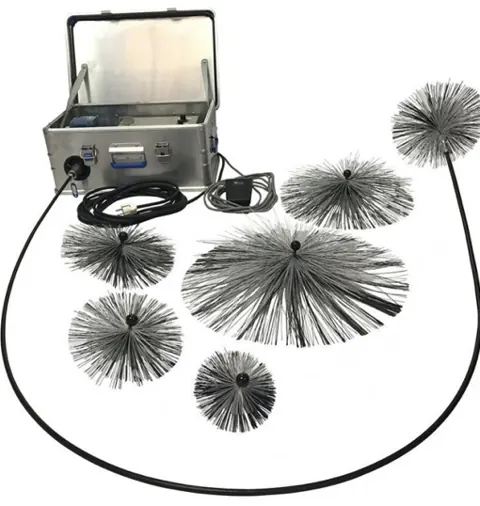 DC4 duct cleaning machineDC4: electric, up to 30 m, ducts from 100 to 600 mm
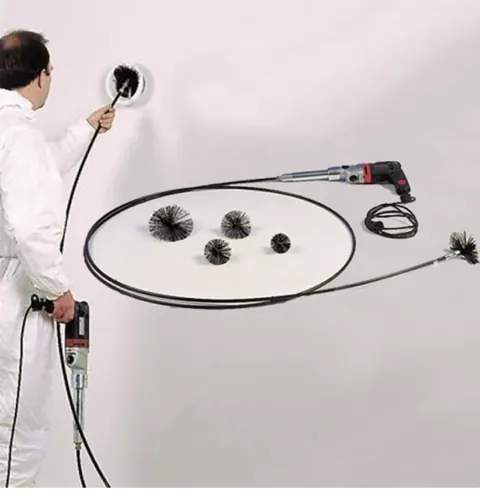 PD4 duct cleanerPD4: runs on a power drill, shaft 2.5 to 7.5 m
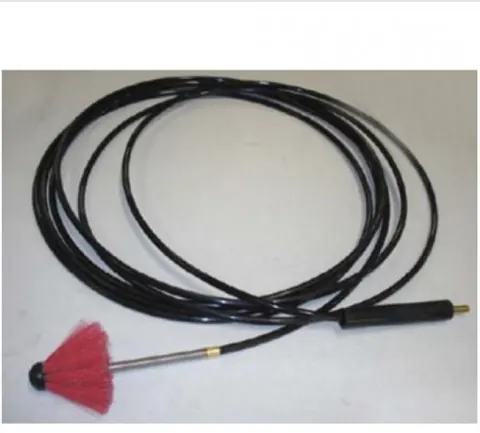 PD2 duct cleanerPD2: compact duct cleaner, specifications via Lamers
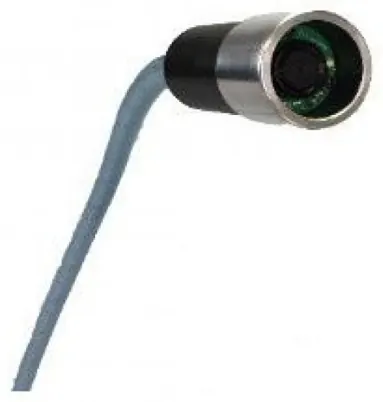 Intelligent AirnozzleCompressed air with camera, ducts from 30 mm
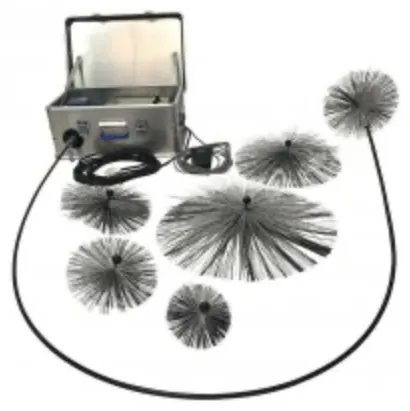 Duct cleaning brushesBrushes and shafts: soft, standard or Tynex
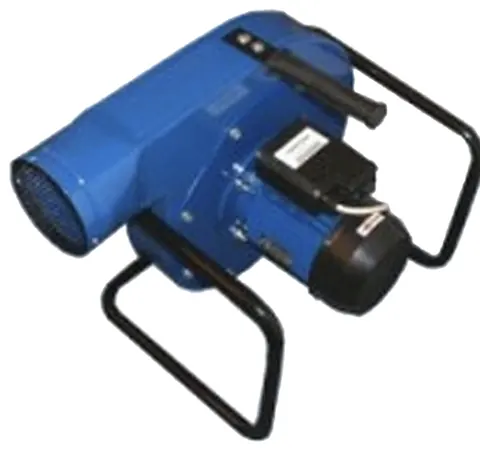 Duct sealing and extractionDuct balloons, diffuser caps and extraction
Frequently asked questions: kitchen extract duct cleaning
Is cleaning a hospitality kitchen extract duct a legal requirement in the Netherlands?
According to KHN, it is not laid down in law how often a hospitality extract duct must be cleaned. You are, however, required to maintain the extraction installation and the duct so that no fire hazard arises. Fire insurers also require regular maintenance, so always check the conditions of your own policy.
How often should the extract duct in a restaurant be cleaned?
KHN names at least once a year as common practice, and more often with grill, fryer or wok. Rabobank advises cleaning professionally at least once a year, and twice a year for a fried food restaurant. With long opening hours and a lot of frying and roasting, a shorter cycle may be needed.
How often should grease filters in a restaurant kitchen be cleaned?
The Goudse prevention conditions for hospitality ask for grease filters to be cleaned or replaced weekly. The exhaust duct and the motor must be inspected every year and, where necessary, cleaned by a specialist. Washing filters therefore does not replace cleaning the duct behind them.
At what grease layer should a hospitality extract duct be cleaned?
The NVRL quality mark scheme, drawn up with TNO, uses an intervention value of 500 µm of grease. After cleaning, the scheme allows a maximum of 200 µm to remain. Measurement is done with a wet film thickness gauge, with a sample behind every extraction hood and per 10 metres of duct.
How do you prove that your restaurant's kitchen extract duct is clean?
KHN names a report, photos and a certificate. A good report contains grease measurements before and after per measuring point, photos of the same spots, the hoods cleaned, duct length, fan and motor, and the spots that were not accessible. Keep it with your insurance papers.
Why is grease in a commercial kitchen extract duct dangerous?
Grease sticks to the inside of the duct and can catch fire during flambéing or a pan fire. That is why insurers want you to maintain the duct. According to Rabobank, most hospitality fires start in the kitchen, with the extraction installation as a major culprit.
Can a restaurant kitchen extract duct be made of flexible hose?
In its prevention conditions, Goudse requires rigid, non flexible and non ribbed ductwork made of aluminium or steel. A ribbed flexible hose holds on to grease and is hardly possible to clean. Check what the conditions of your own insurer say and replace such sections where necessary.
Can you dry brush a hospitality kitchen extract duct?
According to the Eurovent recommendation, dry methods are usually sufficient for ordinary supply and exhaust, but wet methods are needed for commercial kitchen exhaust. Grease smears under a dry brush. So work with a degreaser, then brush mechanically and extract the loosened grease.
Which machine do you use for kitchen extract ducts with bends?
The DC4 from Danduct Clean works in round and square ducts of 100 to 600 mm, goes vertical and through 90 degree bends and reaches up to 30 metres. More aggressive Tynex brushes are available for baked on grease, and Danduct supplies a spraying system for the DC4.
Does the new EN 15780 also apply to kitchen extraction in hospitality?
According to the BSI description of the standard, EN 15780:2025 also covers systems with kitchen extraction, and DIN mentions the extension to commercial kitchens. According to trade publications, the standard contains grease thickness limits comparable to those of the NVRL. The standard itself sets no statutory frequency for hospitality.
Sources and reference date
All facts on this page were checked on 6 October 2026.
- KHN: am I obliged to clean the exhaust duct of my extraction installation? (in Dutch)
- KHN: how to prevent odour nuisance, fire hazard and a wood burning ban (in Dutch)
- Rabobank: fire safety in hospitality (in Dutch)
- Goudse: prevention conditions for commercial premises and hospitality (in Dutch)
- NVRL and TNO: quality mark scheme for cleanliness of air handling systems (in Dutch)
- Brodex Trident: requirements for cleaning kitchen extraction systems
- Eurovent REC 6/7: cleanliness of ductwork
- Danduct: DC4
Editorial team: Lamers Reinigingstechniek B.V., supplier of professional air duct cleaning equipment in Zelhem, the Netherlands. Updated on . See also Lamers cleaning equipment for cleaning contractors.
Request a quote or advice from Lamers

René Hendriksen, Sales Account Manager at Lamers, advises you on the machine, brushes and extraction for your jobs.
Briefly tell us what you clean (duct type, diameter, length, contamination and sector). Lamers will contact you with advice and a tailored quote.
Prefer direct contact? Call +31 (0)314 623 341, message us on WhatsApp 06-38048347 or email info@lamersequipment.nl.
Prefer a quick call first? Lamers will call you back

Leave your number. René Hendriksen or a colleague from Lamers will call you back to discuss duct type, diameter and the right equipment.
Or send us a message right away: WhatsApp 06-38048347