

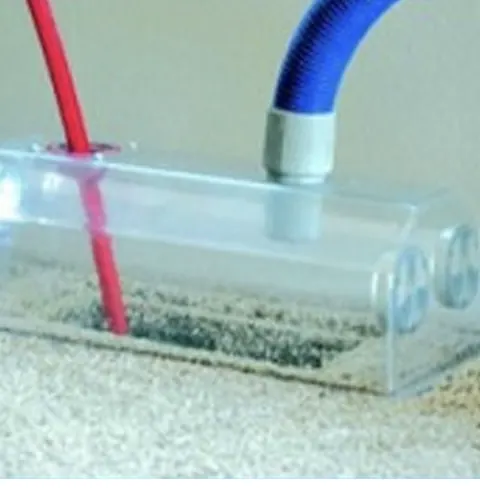
For facility managers and maintenance teams the question is mainly practical: when do you inspect, which benchmark do you use, how do you schedule the work outside office hours and which equipment do you need? This guide sets it all out, with the facts and sources included. Lamers Reinigingstechniek from Zelhem supplies Danduct Clean cleaning equipment to teams who do the work themselves and to cleaning contractors who maintain office buildings.

What does Dutch law say about ventilation ducts in an office?
Article 6.2 of the Working Conditions Decree (Arbobesluit) is the basis for every workplace in the Netherlands. It has several paragraphs that are directly relevant to offices:
| Arbobesluit art. 6.2 | Content | What it means |
|---|---|---|
| Paragraph 1 | Sufficient uncontaminated air at the workplace | Dirty ducts can contaminate the air themselves |
| Paragraph 2 | Air renewal systems always in good working order | Maintenance is not optional but part of the duty |
| Paragraph 4 | Monitoring system that signals faults where needed for health | Monitoring of operation and airflow |
| Paragraph 6 | Workplaces in buildings linked to the Bbl | Building rules for ventilation also apply to the workplace |
For the building itself, the Building Works Living Environment Decree (Bbl) applies: almost every existing building must have a ventilation provision that prevents damage to health (art. 3.67 onwards). For new builds, capacity is determined with NEN 1087. Performance requirements for ventilation in non residential buildings are set out in NEN-EN 16798-3; the 2017 version has been withdrawn and replaced by the 2025 edition. None of these rules contains a fixed cleaning frequency.
Which benchmark do you use for clean office ductwork?
EN 15780:2025 is the European standard for the cleanliness of ventilation systems. It provides cleanliness classes and describes how to assess the need for cleaning (visually and with measurements), how to choose a method and how to verify the result. Informative annex A contains tables with inspection intervals per class in months.
According to trade publications, specific limit values for dust come from the standard; the text of the standard itself was not consulted for this. An overview:
| Source | Value | Application |
|---|---|---|
| MODBS trade article | Dust below 3.0 g/m² | Medium risk buildings such as offices, hotels and schools |
| MODBS trade article | Up to 4.5 g/m² | Secondary ducts |
| Finnish indoor climate classification | P1 1.0 g/m², P2 2.5 g/m² | Measured with a pre weighed filter cassette |
Want to know how these standards relate to each other? Read VDI 6022 ventilation hygiene.
Why clean ducts in a commercial building save money
According to the World Green Building Council, better indoor air quality can increase productivity by 8 to 11 percent. For an office with many people per square metre, that is a strong argument to put to management or the building owner.
Contamination also has technical consequences. Dirty filters create more resistance. In a laboratory study of an MVHR unit, heavily soiled filters delivered 37 percent less supply air; power consumption fell slightly, from 71 to 66 watts, precisely because less air was passing through. The main effect is therefore under ventilation: less fresh air than the design promises, without anyone noticing straight away. According to the EPA, much of the dust sticks to the duct wall, so the dirt stays in the ducts after a filter change.
In practice this means that a filter change on its own is not the end of the story. Combine it with an occasional look inside the ducts, so you know whether the airflow your design promises still reaches the desks.
Cleaning office ductwork outside working hours: a schedule
Offices are empty in the evening and at weekends, and that is the moment to work. A schedule per floor:
- Survey the air handling units, main ducts, branches and valves on each floor.
- Inspect with a camera through existing access doors or valve openings.
- Schedule an evening or part of a weekend per floor, so staff start Monday in a clean environment.
- Protect workstations with dust sheets and close off valves with foam caps.
- Clean under continuous negative pressure, with HEPA filtration if you exhaust indoors.
- Record with before and after photos in the maintenance file.
If access doors are missing, have them fitted. Eurovent recommends openings no more than 10 metres apart or after no more than two bends of 45 degrees or more, and for ducts above 500 mm an access door of at least 500 by 400 mm.
Commercial building duct cleaning: dry or wet, brush or compressed air?
According to Eurovent, dry methods are usually sufficient for supply ducts and general extract. Only commercial kitchen extract calls for a wet method. In offices you therefore mostly work with rotating brushes or compressed air, combined with extraction.
| Method | Strong in | Watch out |
|---|---|---|
| Rotating brush on a shaft | Main ducts and long straight sections | Match brush stiffness to the duct material |
| Compressed air with camera | Small ducts, many bends | Compressor needed, extraction on the duct |
| Manual | Valves and grilles | Not suitable for long ducts |
| Wet method | Commercial kitchen extract | Only where there is grease |
Treat the staff restaurant as a commercial kitchen; see cooker hood duct cleaning. A full explanation of the steps can be found in how to clean air ducts.
Which equipment suits office ventilation duct cleaning?
Most office buildings have round or rectangular ducts in the mid range. Danduct Clean DC4 for cleaning contractors is made for those ducts: diameters from 100 to 600 mm, a reach of up to 30 metres, adjustable speed and an automatic left and right system.
For short branches to meeting rooms or toilets, PD4 duct cleaner for cleaning contractors is more practical, and for ducts with many bends the compressed air nozzle with camera. To prevent dust spreading you also need duct sealing and extraction for cleaning contractors. You can see all machines side by side under air duct cleaning tools for cleaning contractors.
A useful approach for a facilities team is to match each tool to a part of the building: the brushing machine for the main runs, the compact cleaner for the short branches and the camera nozzle for the awkward sections. That keeps every evening session focused on one type of work.
What does air duct cleaning cost in an office building?
There is no fixed price. One large cleaning contractor, for example, does not use a price per m² or per building: the price depends on the building type, the number and length of ducts, the contamination and the accessibility. In April 2026, a Dutch provider quoted €150 to €350 per unit for smaller commercial buildings and €450 to €950 for a camera inspection.
Fictional calculation: an office with four small units and a camera inspection comes out, within those ranges, between 4 x 150 + 450 = €1,050 and 4 x 350 + 950 = €2,350. For larger buildings with central air handling this is not a usable estimate; there it is a custom price after inspection. If you clean yourself, the investment in equipment is priced on quotation by Lamers.
For more background, see air duct cleaning prices. Other building types can be found via ductwork cleaning per industry, and for school buildings with similar systems there is a guide on fresh air in classrooms.
Air duct cleaning equipment from Lamers at a glance
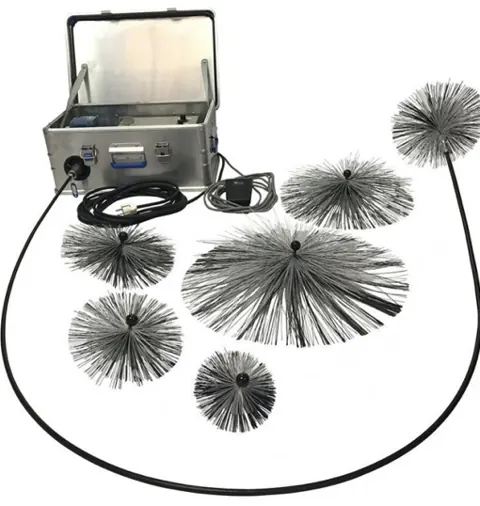 DC4 duct cleaning machineDC4: electric, up to 30 m, ducts from 100 to 600 mm
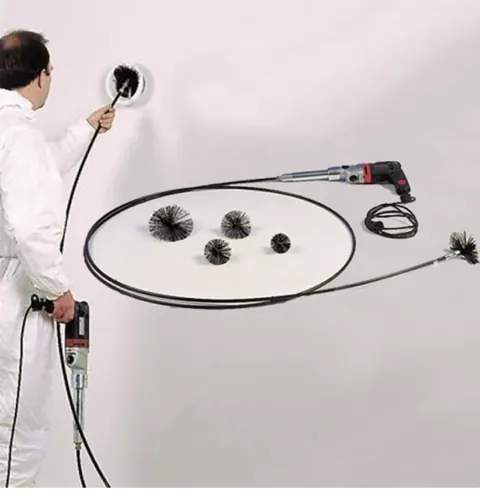 PD4 duct cleanerPD4: runs on a power drill, shaft 2.5 to 7.5 m
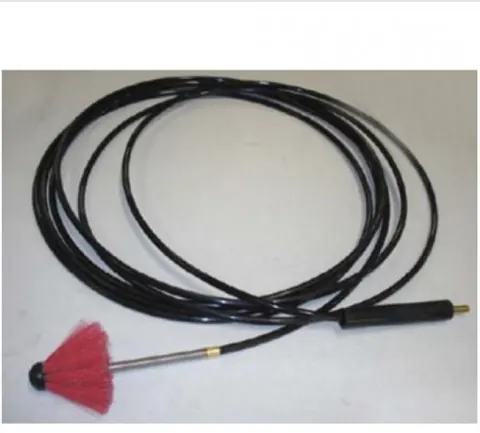 PD2 duct cleanerPD2: compact duct cleaner, specifications via Lamers
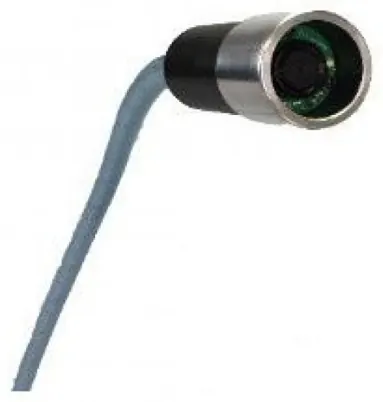 Intelligent AirnozzleCompressed air with camera, ducts from 30 mm
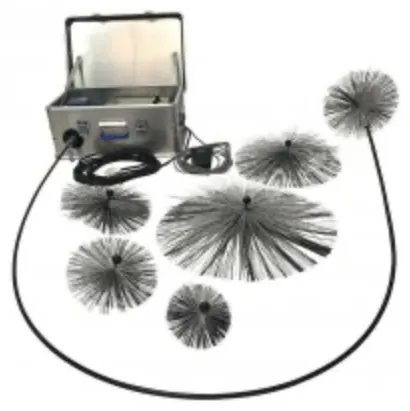 Duct cleaning brushesBrushes and shafts: soft, standard or Tynex
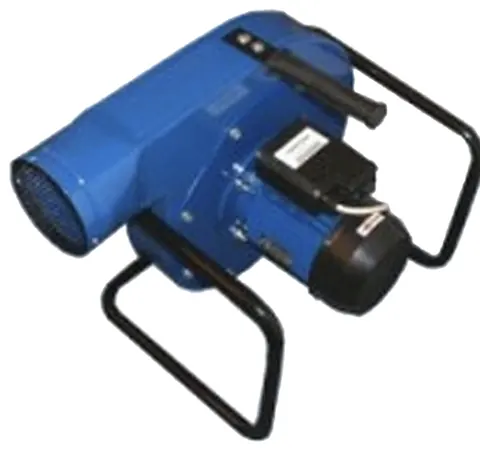 Duct sealing and extractionDuct balloons, diffuser caps and extraction
Frequently asked questions: office air duct cleaning
Is air duct cleaning in an office a legal requirement in the Netherlands?
The law contains no cleaning frequency. However, article 6.2 of the Working Conditions Decree (Arbobesluit) requires sufficient uncontaminated air at the workplace and an air renewal system that is always in good working order. If ducts or filters are so dirty that the air becomes contaminated or the airflow drops, you no longer comply. Maintenance is the practical way to meet that duty.
How often should the air ducts of an office building be inspected?
EN 15780:2025 gives inspection intervals per cleanliness class in months in annex A. A trade article on the standard mentions a risk assessment every 2 years for ordinary buildings. If your system has humidification, VDI 6022 mentions a hygiene inspection every 2 years, and every 3 years without humidification. Clean when the inspection shows it is needed.
Which dust limit applies to air ducts in offices?
According to a trade article in MODBS, medium risk buildings such as offices, hotels and schools have a limit below 3.0 g/m², and secondary ducts up to 4.5 g/m². These values come from trade publications on EN 15780, not from the text of the standard itself. Use them as a guide and have your measuring method recorded in the inspection report.
Does cleaning office ventilation deliver measurable benefits?
According to the World Green Building Council, better indoor air quality can raise productivity by 8 to 11 percent. Laboratory research also shows that heavily soiled filters can reduce supply air by 37 percent. Clean filters and ducts therefore help you achieve the airflow the system was designed for.
Can office ducts be cleaned without disturbing staff?
Yes, by working floor by floor in the evening or at weekends. Cover workstations, close off valves with foam caps and keep the duct under negative pressure with an extraction unit. If you exhaust indoors, use a HEPA filter of 99.97% at 0.3 µm. That way everyone starts the next working day in a clean environment.
Which cleaning machine suits the main ducts of an office?
For round and rectangular ducts from 100 to 600 mm, the Danduct Clean DC4 is suitable. It cleans up to 30 metres deep, also through 90 degree bends and vertical sections, with adjustable speed and automatic direction of rotation. You feed the shaft into the duct and the machine does the rest. Lamers advises on the right package.
Should the staff restaurant be treated separately during office duct cleaning?
Yes. Kitchen extraction behaves differently from office ventilation, because grease gets into the duct. According to Eurovent, wet methods are needed there, while dry methods are usually sufficient for supply and general extract. The NVRL quality mark scheme for kitchen extraction lists offices alongside hospitality, hospitals and care homes.
What does it cost to clean the air ducts in a small commercial building?
In April 2026, a Dutch provider quoted €150 to €350 per unit for smaller commercial buildings and €450 to €950 for a camera inspection. Larger buildings with central air handling are custom work; cleaning contractors price them after inspection, based on duct length, contamination and accessibility. Always ask for a quote based on an inspection.
Where should access doors be placed in office ducts?
Eurovent recommends inspection openings no more than 10 metres apart or after no more than two bends of 45 degrees or more. Ducts larger than 500 mm need an access door of at least 500 by 400 mm. Also place openings on both sides of dampers, coils, MVHR units, attenuators, filters and fans.
Can a facilities team clean office ducts itself?
For valves, grilles and short ducts, yes, with a compact cleaner and the right brushes. For long main ducts you need a brushing machine, plus duct balloons and extraction with a HEPA filter. Many maintenance teams combine their own upkeep with a periodic inspection by another party. Lamers supplies the equipment and helps you choose.
Sources and reference date
All facts on this page were checked on 6 October 2026.
- Working Conditions Decree (Arbobesluit) article 6.2, air renewal (in Dutch)
- IPLO, ventilation in existing buildings (in Dutch)
- MODBS: Keep it Clean (Airmec)
- World Green Building Council, indoor environment
- Energies 2025: filter fouling in an MVHR unit
- Eurovent REC 6/7, cleanliness of ductwork
- Deep Clean Services, costs 2026 (in Dutch)
- Hamster Cleaning: air duct cleaning costs (in Dutch)
Editorial team: Lamers Reinigingstechniek B.V., supplier of professional air duct cleaning equipment in Zelhem, the Netherlands. Updated on . See also Lamers Zelhem for cleaning contractors.
Request a quote or advice from Lamers

René Hendriksen, Sales Account Manager at Lamers, advises you on the machine, brushes and extraction for your jobs.
Briefly tell us what you clean (duct type, diameter, length, contamination and sector). Lamers will contact you with advice and a tailored quote.
Prefer direct contact? Call +31 (0)314 623 341, message us on WhatsApp 06-38048347 or email info@lamersequipment.nl.
Prefer a quick call first? Lamers will call you back
Leave your number. René Hendriksen or a colleague from Lamers will call you back to discuss duct type, diameter and the right equipment.
Or send us a message right away: WhatsApp 06-38048347