

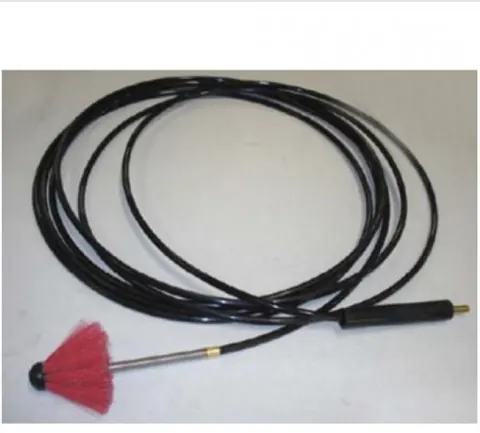
You will read which questions to ask before you order a PD2, how to compare it with the other Danduct Clean machines and which jobs a compact machine should and should not be expected to handle. That way you go into the conversation with Lamers with a concrete list and avoid buying a machine that does not quite fit your ductwork.

What do you know for certain about the PD2 duct cleaning tool?
In short: the PD2 is part of the Lamers range, in the air duct cleaning category, alongside the DC4, the PD4 and the Intelligent Airnozzle. Lamers has supplied professional cleaning equipment for industrial cleaning and maintenance for more than fifty years, both standard and customised. That much is established.
What you will not get from this page: the diameter range, shaft length, drive, weight or price of the PD2. Those details could not be verified, and a wrong size costs you more than a phone call. If you come across figures without a source, it is wise to have the supplier confirm them first.
What you can do is get a sharp picture of your own situation. The better you know which ducts you have, the faster Lamers can tell you whether the PD2 fits or whether another model makes more sense. The following sections cover exactly that.
Which questions should you ask Lamers about the PD2 duct cleaner?
Use this list as a call script. Ask about every point and write the answer next to it, so you can compare the PD2 fairly with the other machines.
| Question for Lamers | Why it matters | Your situation |
|---|---|---|
| Which duct diameters does the PD2 handle, from smallest to largest? | A brush that is too small does not touch the wall, one that is too big gets stuck | Note the smallest and largest size |
| How long is the shaft and can it be extended? | Determines how many access hatches you need | Longest straight run between two openings |
| How is the brush driven? | A built-in motor or a power drill makes a difference in weight and force | Is there 230 volts at the work location? |
| Does it work in round and rectangular ducts? | Many commercial buildings have both | Duct shapes in your building |
| How does it cope with bends and vertical sections? | Bends and risers are the trickiest spots | Number of bends per run |
| Which brushes fit on it? | Soft, normal or aggressive, depending on material and dirt | Sheet steel, flexible duct or duct board? |
| Can it be combined with extraction and duct plugs? | Loosened dust must be removed under negative pressure | Which extraction unit do you already have? |
Two extra questions people often forget: which parts are included as standard and which you have to order separately, and how you transport and store the machine. This page deliberately gives no answer to those, because only Lamers can.
When does a compact duct cleaner suit your work?
A compact machine is interesting if you mainly deal with short duct sections, individual exhaust points or recurring maintenance. Think of a facilities team that looks after the exhaust ducts of toilet and washroom areas itself, or an installer who wants to include the first stretch of duct behind a valve during a service visit.
A compact machine makes less sense if you have long horizontal runs, large cross sections or heavy contamination. There you want reach and a shaft that keeps the brush in the centre of the duct. That is exactly what the DC4 duct cleaning machine is made for: according to Lamers it reaches up to 30 metres in ducts from 100 to 600 mm, including vertical runs and 90 degree bends.
Three example situations
- Fictional example 1: a school with a short exhaust duct per classroom leading to a central shaft. Here it is all about many short jobs in a row. Ask Lamers whether the PD2 is intended for that.
- Fictional example 2: a distribution centre with long supply ducts above the racking. A short shaft will not get you far enough here, and a machine with more reach is more logical.
- Fictional example 3: an office with thin flexible connections to ceiling grilles. Here compressed air with a camera may suit better than a brush.
PD2, PD4, DC4 or Airnozzle: how do you compare duct cleaners fairly?
Put the machines side by side on the points that matter for your ducts. Fill in the PD2 column after your conversation with Lamers.
| Point | PD2 | PD4 | DC4 | Intelligent Airnozzle |
|---|---|---|---|---|
| Drive | ask Lamers | power drill (cordless or mains) | own motor, 230 volts | compressed air, self propelling |
| Reach | ask Lamers | shaft 2.5 to 7.5 m | up to 30 m | 20 m hose included |
| Duct size | ask Lamers | brushes 100 to 600 mm | 100 to 600 mm | from 30 mm |
| Camera | ask Lamers | ✗ | ✗ | ✓ with LED lighting |
| 90 degree bends | ask Lamers | not stated | ✓ | ✓ |
Sources: Lamers and Danduct Clean, reference date 6 October 2026. The manufacturer describes the PD4 duct cleaner as very easy to handle and suitable for small ducts. If you want all machines and their accessories in one overview, look at the full range of duct cleaning equipment.
How do you survey your ducts before choosing a PD2 duct cleaner?
A good machine choice does not start in the catalogue but in the ceiling void. With these five steps you will have the data Lamers needs in a single afternoon.
- Draw the runs. Use the installation drawing or walk the route. Note where each run starts and ends.
- Measure cross sections. For each run, the smallest and largest diameter, or width and height for rectangular ducts.
- Count openings. A Eurovent recommendation mentions inspection openings at most 10 metres apart, or after no more than two bends of 45 degrees or more. The further apart the openings, the more reach you need.
- Identify the material. Sheet steel, flexible duct or duct board. That determines whether you choose a soft or a stiffer brush.
- Describe the dirt. Dry dust, grease, construction dust or something sticky. According to Eurovent, dry methods are usually sufficient for supply and general exhaust, but exhaust from commercial kitchens calls for wet methods.
With those five answers Lamers can tell you concretely whether the PD2 is the right machine. If you are unsure about the dirt itself, first read about the duct cleaning method.
What else do you need besides the PD2 to clean ducts?
A brushing machine loosens dirt but does not remove it. Without extraction, the airflow blows the loosened dust further into the system or out into the room. Cleaning contractors therefore work under negative pressure and seal off sections of the duct.
- Duct plugs: balloons to seal off a duct section and caps to cover valves and grilles. More on this under sealing balloons and vent caps.
- Extraction with a filter: a unit that puts the duct under negative pressure and filters the dust.
- Brushes: a set in the sizes of your ducts, with the right stiffness. See choosing the right duct brush.
- Access: inspection hatches in sensible places, so you can insert the machine.
So when you ask for a quote, do not just ask Lamers about the PD2 but about the complete package you need to deliver a duct clean from start to finish.
Which misconceptions about compact duct cleaners do you often hear?
Misconception 1: a small machine is always the cheap option. Not if it means having extra hatches fitted or returning twice. Calculate the whole job, including access and extraction. Indications of what an outsourced clean costs can be found under what duct cleaning costs.
Misconception 2: what you cannot see is clean. KHN (Royal Dutch Hospitality Association) points out that serious contamination is often not visible to the naked eye. A brush without a check afterwards therefore gives you no certainty.
Misconception 3: every brush fits every machine. Shafts and couplings differ per type. So always ask which brushes belong with the PD2.
Misconception 4: a machine replaces the maintenance plan. How often you clean depends on the building and how it is used. A guideline per situation can be found under duct cleaning frequency.
Who should consider asking about the PD2 compact duct cleaner?
The PD2 is worth considering for organisations that do their own maintenance and do not need a complete fleet of machines. For example facilities teams of schools, care locations or offices, and installers who maintain ventilation and want to include the duct as well.
For companies whose main activity is air duct cleaning, a combination of machines is more logical, because they encounter different ducts in every building. That is covered on the page about equipment for cleaning contractors.
Want to know whether the PD2 suits you? Send your measurements along with a question to Lamers, or request a quotation. Lamers is based in Zelhem in the Netherlands and provides the current specifications.
Air duct cleaning equipment from Lamers at a glance
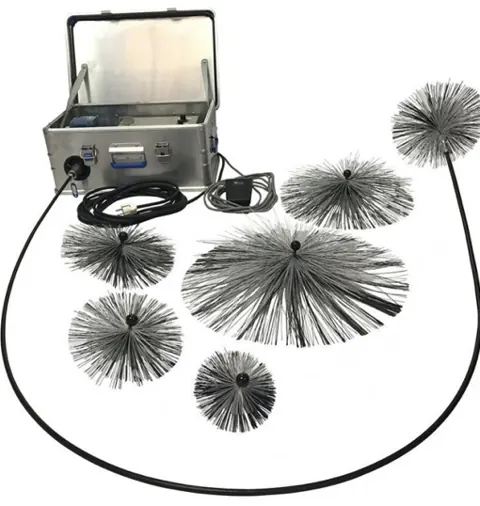 DC4 duct cleaning machineDC4: electric, up to 30 m, ducts from 100 to 600 mm
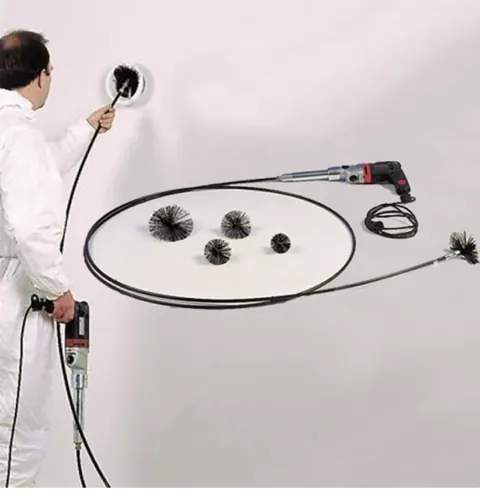 PD4 duct cleanerPD4: runs on a power drill, shaft 2.5 to 7.5 m
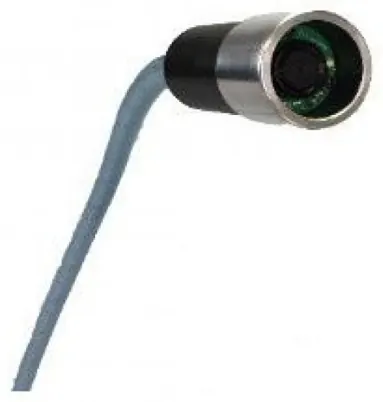 Intelligent AirnozzleCompressed air with camera, ducts from 30 mm
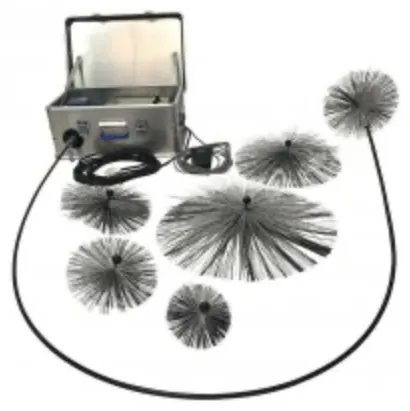 Duct cleaning brushesBrushes and shafts: soft, standard or Tynex
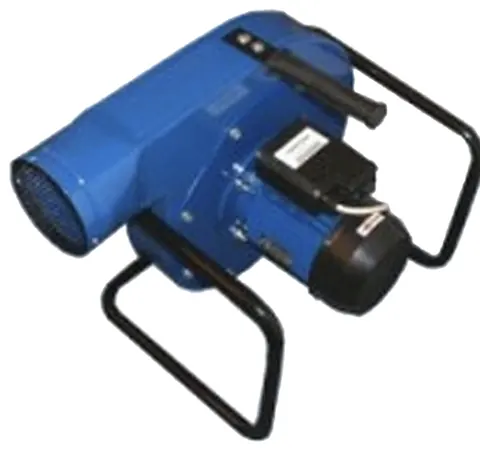 Duct sealing and extractionDuct balloons, diffuser caps and extraction
Frequently asked questions: PD2 duct cleaner
Where can I find the specifications of the PD2 duct cleaner?
Lamers Reinigingstechniek provides the specifications of the PD2 itself. On 6 October 2026 they could not be verified publicly, which is why they are not on this site. Request them through the contact form or ask for a callback, and mention the diameters and lengths of your ducts straight away.
Is the PD2 from Lamers the same machine as the PD4 from Danduct Clean?
No, they are two separate machines in the range. The PD4 is known to run on a power drill and to have a shaft of 2.5 to 7.5 metres. For the PD2, check the drive and shaft length with Lamers, so you can compare the two machines fairly.
Which duct details should I provide when I want to order a PD2 duct cleaner?
For each run, give the smallest and largest cross section, the shape (round or rectangular), the distance between openings, the number of bends and the duct material. Also describe the type of dirt, for example dry dust or grease. With those details Lamers can determine whether the PD2 fits.
Can I also clean greasy kitchen extract ducts with the PD2?
That is best asked of Lamers. According to a Eurovent recommendation, exhaust from commercial kitchens usually calls for wet methods, while dry methods are sufficient for supply and general exhaust. A dry brush on its own is therefore often not enough for a greasy kitchen extract system.
Do I also need extraction when using the PD2 duct cleaner?
Yes. A brush loosens dust but does not carry it away. Keep the duct section you are cleaning under negative pressure with a filtered extraction unit and seal off valves and duct sections. That prevents the dust from ending up in the room or further along in the system.
Is a compact PD2 duct cleaner suitable for long ducts in a warehouse hall?
For long horizontal runs, reach is important. According to Lamers, the DC4 reaches up to 30 metres in ducts from 100 to 600 mm. Whether the PD2 is intended for long sections is something to check with Lamers before you choose. Mention the longest distance between two openings.
Which brushes should I use on the PD2 for sheet steel ducts?
Lamers specifies which brushes fit the PD2. In general, the US EPA recommends soft brushes for fibreglass duct board and sheet metal ducts, so that the wall is not damaged. Stiffer brushes are intended for stubborn dirt on sturdy duct walls.
Can a facilities team do its own duct maintenance with the PD2?
A facilities team can carry out regular maintenance with its own equipment, provided there is extraction, duct plugs and sufficient access. Discuss with Lamers which work you want to do yourself and which parts, such as the ventilation box with its motor, are better left to a specialist.
How do I request a quote for the PD2 duct cleaner?
Use the quote form, request a callback or ask Lamers in Zelhem a question, for example via WhatsApp. Include the duct sizes, the lengths and the type of building in your request. You will then receive a quote for the right package, including brushes and any extraction you need.
Why are there no prices for the PD2 on this page?
Prices for the PD2 were not public on the reference date and are therefore not mentioned here. The price also depends on how the package is put together, for example which brushes and accessories you choose. So request a quote and include your own duct details.
Sources and reference date
All facts on this page were checked on 6 October 2026.
- Lamers Reinigingstechniek: product overview and sitemap (in Dutch)
- Lamers: DC4 duct cleaner (in Dutch)
- Danduct Clean: PD4 and PD5
- Lamers: Intelligent Airnozzle (in Dutch)
- Eurovent REC 6/7: Cleanliness of ductwork
- US EPA: Should you have the air ducts in your home cleaned?
- KHN: preventing odour nuisance, fire risk and a cooking ban (in Dutch)
Editorial team: Lamers Reinigingstechniek B.V., supplier of professional air duct cleaning equipment in Zelhem, the Netherlands. Updated on . See also Lamers from Zelhem.
Request a quote or advice from Lamers

René Hendriksen, Sales Account Manager at Lamers, advises you on the machine, brushes and extraction for your jobs.
Briefly tell us what you clean (duct type, diameter, length, contamination and sector). Lamers will contact you with advice and a tailored quote.
Prefer direct contact? Call +31 (0)314 623 341, message us on WhatsApp 06-38048347 or email info@lamersequipment.nl.
Prefer a quick call first? Lamers will call you back

Leave your number. René Hendriksen or a colleague from Lamers will call you back to discuss duct type, diameter and the right equipment.
Or send us a message right away: WhatsApp 06-38048347