

On this page you will read how to tell those two kinds of ducts apart, which rules and trade guidelines apply and which machine from Lamers Reinigingstechniek in Zelhem suits which duct. Lamers supplies the equipment; the cleaning itself is done by your own facilities team or left to a specialist company.

What do the CBS figures say about the ducts in Zaanstad?
Zaanstad has 161,389 inhabitants, which puts it in 17th place among the 342 Dutch municipalities. The municipality is strongly urban (class 2) with 2,189 inhabitants per km² and consists of several towns and villages, each with its own business parks and facilities. There are almost 139 business establishments per 1,000 inhabitants. If you translate the sectors into ventilation maintenance, you get this picture:
| Sector (CBS 2024) | Establishments | Share | What it means for the ducts |
|---|---|---|---|
| Business services | 5,235 | 23.3% | office ventilation, filters and supply ducts |
| Manufacturing and energy | 4,835 | 21.6% | process extraction, dust and vapour, extraction at source |
| Government, education and care | 3,510 | 15.7% | schools and care, hygiene and CO2 |
| Trade and hospitality | 3,425 | 15.3% | kitchen extraction with grease deposits |
| Culture, recreation, other services | 2,325 | 10.4% | sports halls, changing rooms, moisture extraction |
| Transport, information and communication | 2,205 | 9.8% | warehouses, server rooms, office sections |
More than one in five establishments therefore works with machines, ovens, mixing installations or other sources that are extracted locally. There, ducts get dirty in a different way and faster than above an office floor.
For a contractor or facilities team that plans work in the area, the table is also a planning tool. Offices and schools usually fit a yearly or multi year inspection round, while the production and hospitality share calls for shorter intervals and heavier equipment in the van.
Process extraction and comfort ventilation: why ventilation duct cleaning in Zaanstad is two trades
The European standard EN 15780 describes cleanliness classes, the assessment of the need for cleaning and the checking of the result for ventilation systems in buildings. Industrial process installations are explicitly excluded. For an office section or canteen in a Zaanstad company you use that standard as a framework; for the extraction above a production line you look at occupational health and safety requirements and trade guidelines.
For process extraction, these reference points are useful:
- For inert dust, the Dutch metal sector uses 10 mg/m³ inhalable and 5 mg/m³ respirable as an 8 hour average (Volandis).
- The British HSE wants local exhaust ventilation thoroughly examined and tested at least every 14 months, with a record kept for 5 years.
- Working Conditions Decree (Arbobesluit) article 4.5: anyone who removes contaminated air must supply enough clean air at the same time.
This means that a contaminated extract duct is not only a hygiene problem: less airflow at the source means more dust at the workplace.
Combustible dust in the extraction: what needs extra attention?
Fine dust from flour, sugar or wood can ignite at a high concentration. For the bakery sector, TNO names an explosion limit from about 60 g/m³ of fine dust. In woodworking, fire safety experts point to spark detection and ATEX rules for extraction installations. That has direct consequences for the way you clean:
- Do not blow flour dust away with compressed air; Alimento and TNO recommend an industrial vacuum cleaner.
- In an ATEX zone, an ATEX 114 certified vacuum cleaner is needed.
- Extract the dust that is brushed loose straight away, so it does not settle in the hall.
If you work in the food sector, also read what is involved under air duct cleaning in the food industry: the Netherlands Food and Consumer Product Safety Authority (NVWA) asks that airflows do not run from dirty to clean rooms and that filters are easy to reach.
Duct cleaning Zaanstad: which machine suits which duct?
The choice mainly depends on cross section, length and the number of bends. The overview below is based on the specifications of Danduct Clean, the Danish manufacturer whose machines Lamers supplies.
| Situation | DC4 | PD4 | Intelligent Airnozzle |
|---|---|---|---|
| Main duct 300 to 600 mm, long runs | ✓ up to 30 m | ✗ shaft max 7.5 m | no upper limit stated |
| Short branch 100 to 250 mm | ✓ | ✓ with power drill | ✓ |
| Small ducts from 30 mm, tight bends | ✗ | ✗ | ✓ with camera |
| Vertical ducts and 90 degree bends | ✓ | not stated | ✓ |
| Power supply | 230 volt | battery or mains via power drill | compressor 700 L/min at around 10 bar |
For wide main ducts in a production hall, the DC4 duct cleaner for businesses is usually the starting point: the steel shaft keeps the brush centred and an adjustable left and right system reverses automatically. In doubt about a combination? Then look at the full overview of ventilation duct cleaning tools for businesses.
How do you keep the dust inside the duct during cleaning?
Brushing loosens dirt. Without measures, that dirt returns to the room through the grilles. Trade publications agree on this: keep every section to be cleaned under continuous negative pressure with an extraction unit. If that unit exhausts inside the building, a HEPA filter with 99.97% at 0.3 µm is the standard.
Also seal off the section you are working on. Danduct supplies duct sealing balloons for round ducts and foam caps for valves and diffusers. More explanation of that combination under negative pressure with HEPA extraction for businesses. Pay attention to access as well: Eurovent advises inspection openings no more than 10 metres apart or after at most two bends of 45 degrees or more.
In a busy production hall, plan the sealing together with the production schedule. A run that is sealed and under negative pressure can be cleaned while the rest of the line keeps going, as long as the extraction for that run is switched off in consultation with the facilities team.
Fictitious example: a maintenance round in a Zaanstad production hall
A fictitious example makes the order of work concrete. A food producer has an extract duct of 400 mm over 25 metres and four branches of 160 mm to the workstations.
- Inspect with a camera and take photos of the starting condition.
- Seal the branches with balloons and connect an extraction unit with HEPA.
- Brush the main duct with the DC4 and a more aggressive Tynex brush for caked on dust.
- Treat the branches separately with a smaller brush.
- Measure again, take new photos and add the report to the maintenance file.
There is no price in this example: that depends on the kit chosen and you request it from Lamers via the quote button or the form to contact Lamers for cleaning contractors.
What the example shows is that the branches are where most time goes. Four short ducts of 160 mm each need their own sealing, brush change and photo set, so count the branches, not just the metres, when you plan the job.
Air duct cleaning in Zaanstad and the neighbouring municipalities
Anyone running a facilities team in Zaanstad often also works for sites in the region. The profile differs per municipality: duct cleaning equipment in Amsterdam is more about offices and hospitality in a very strongly urban setting, while the page on duct cleaning equipment in Purmerend covers a municipality with a smaller business base. All municipalities in a row can be found under regional air duct cleaning.
Lamers has no branch in Zaanstad. The company is based in Zelhem and supplies the equipment throughout the Netherlands. For more sector knowledge about production environments, go to air duct cleaning in industry.
Air duct cleaning equipment from Lamers at a glance
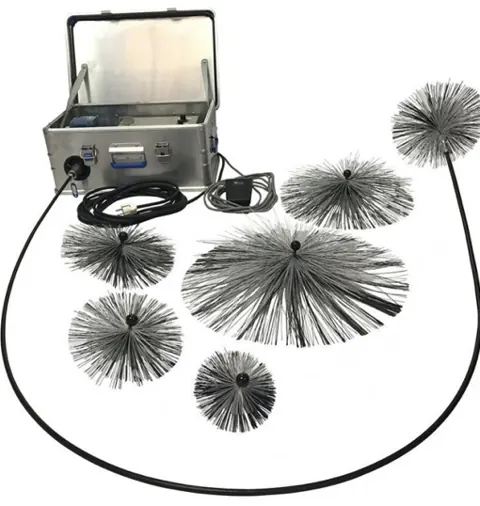 DC4 duct cleaning machineDC4: electric, up to 30 m, ducts from 100 to 600 mm
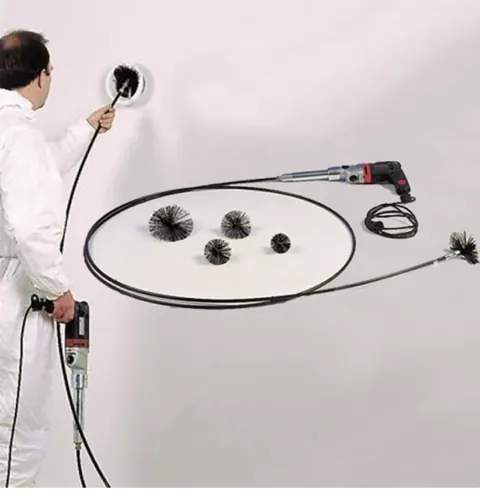 PD4 duct cleanerPD4: runs on a power drill, shaft 2.5 to 7.5 m
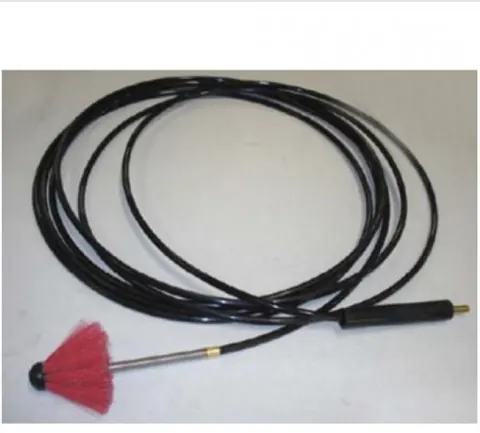 PD2 duct cleanerPD2: compact duct cleaner, specifications via Lamers
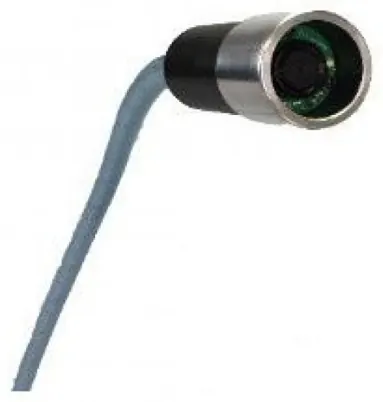 Intelligent AirnozzleCompressed air with camera, ducts from 30 mm
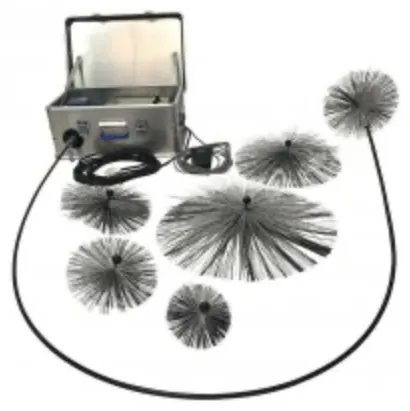 Duct cleaning brushesBrushes and shafts: soft, standard or Tynex
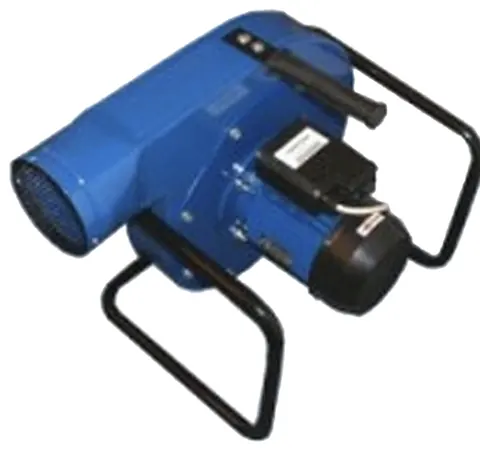 Duct sealing and extractionDuct balloons, diffuser caps and extraction
Frequently asked questions: air duct cleaning Zaanstad
Does the extraction in a Zaanstad production hall fall under EN 15780?
No, EN 15780 excludes industrial process installations. The standard covers ventilation systems in buildings, such as offices, schools and, since the 2025 version, also commercial kitchens. For process extraction you use occupational health and safety requirements and trade guidelines, for example the HSE advice to examine local exhaust ventilation at least every 14 months.
How many businesses in Zaanstad work in manufacturing and energy?
According to CBS 2024 there are 4,835 establishments, 21.6% of the total of 22,425. That is a large share, and it is precisely in that sector that extract ducts carry away dust, vapour or grease. There a duct gets dirty faster than with ordinary office ventilation.
Which machine do you choose in Zaanstad for an extract duct of 400 mm?
For a round or square duct of 400 mm with a length of up to 30 metres, the DC4 from Danduct Clean is the logical choice. It runs on 230 volt, can handle vertical sections and 90 degree bends and has brushes from 100 to 600 mm. Lamers will advise you on the right kit.
Can you blow flour dust out of a duct with compressed air in a Zaanstad bakery?
That is advised against. Alimento and TNO advise not to use compressed air with flour dust, but an industrial vacuum cleaner. In an ATEX zone that vacuum cleaner must be ATEX 114 certified. Compressed air actually spreads the dust through the room, with a higher exposure and explosion risk.
How often should a Zaanstad company have its local exhaust ventilation checked?
There is no Dutch statutory frequency for cleaning process extraction. As a reference point, the British HSE advice applies: thoroughly examine and test at least every 14 months, and keep the record for 5 years. Set your own interval in the maintenance plan based on inspections.
Does Lamers have a branch in Zaanstad?
No. Lamers Reinigingstechniek B.V. is based in Zelhem in Gelderland and supplies air duct cleaning equipment to businesses throughout the Netherlands. You request a quote, request a callback or ask a question via the site. The cleaning itself is done by your own team or a cleaning contractor.
Why is negative pressure important for duct cleaning in Zaanstad business halls?
Brushing loosens dirt that would otherwise blow into the hall through the grilles. With an extraction unit you keep the duct section under continuous negative pressure. If the unit exhausts indoors, it needs a HEPA filter that stops 99.97% of particles of 0.3 µm.
How far apart can inspection hatches be in a Zaanstad extract duct?
Eurovent advises inspection openings no more than 10 metres apart, or after no more than two bends of 45 degrees or more. Ducts wider than 500 mm need a hatch of at least 500 by 400 mm. Without good access you cannot clean or check a duct properly.
What does air duct cleaning equipment cost for a business in Zaanstad?
Lamers does not list fixed prices on its site; you get a price by quotation. The cost depends on the machine, the length of the shafts and the number of brushes. A DC4 is available, for example, as a Medium package with shafts of 10 and 20 metres, or as a Large package with 30 metres and a trolley.
Which Zaanstad ducts do you clean with the Intelligent Airnozzle?
The Intelligent Airnozzle is intended for small ducts from 30 mm and tight 90 degree bends, where a brush shaft cannot get through well. The built-in camera with LED light shows what you are cleaning. You do need a compressor of at least 700 L/min at around 10 bar.
Sources and reference date
All facts on this page were checked on 6 October 2026.
- Statistics Netherlands (CBS): key figures for districts and neighbourhoods 2024 (in Dutch)
- Volandis factsheet metalworker (in Dutch)
- HSE: local exhaust ventilation FAQ
- TNO memo on vacuum cleaners in the bakery sector (in Dutch)
- DIN Media: EN 15780
- Eurovent REC 6/7
- Lamers: DC4 duct cleaner (in Dutch)
- Danduct: DC4
Editorial team: Lamers Reinigingstechniek B.V., supplier of professional air duct cleaning equipment in Zelhem, the Netherlands. Updated on . See also Lamers cleaning equipment for businesses.
Request a quote or advice from Lamers

René Hendriksen, Sales Account Manager at Lamers, advises you on the machine, brushes and extraction for your jobs.
Briefly tell us what you clean (duct type, diameter, length, contamination and sector). Lamers will contact you with advice and a tailored quote.
Prefer direct contact? Call +31 (0)314 623 341, message us on WhatsApp 06-38048347 or email info@lamersequipment.nl.
Prefer a quick call first? Lamers will call you back
Leave your number. René Hendriksen or a colleague from Lamers will call you back to discuss duct type, diameter and the right equipment.
Or send us a message right away: WhatsApp 06-38048347