

The real pressure often comes from a different direction: the fire insurer. For kitchen extraction in hospitality, insurers such as Goudse and De Zeeuwse require an annual inspection of the duct and the fan motor in their prevention conditions, and after a claim you must be able to show that this was done. EN 15780:2025 is the leading standard in this field, but a standard is not a law.
On this page you can read, rule by rule, what the text literally says, which popular claims do not hold up and what this means for anyone who cleans ducts professionally. Everything has been checked against primary sources, last verified on 6 October 2026. Please note: this is not legal advice. If you are unsure about your own situation, put the question to your insurer, occupational health service or lawyer.

Duct cleaning legal requirements: every rule in one overview
There is no single rule that covers everything. Four types of source together determine what you have to do. The table below shows, per source, what is actually regulated and what is not.
| Source | What it says | Cleaning frequency? |
|---|---|---|
| Working Conditions Decree (Arbobesluit) art. 6.2 | Sufficient uncontaminated air; installations always in working order; fault signalling where needed for health | ✗ No |
| Working Conditions Act (Arbowet) art. 3 | General duty of care of the employer for safety and health | ✗ No |
| Building Works Living Environment Decree (Bbl) | Existing buildings must have a ventilation provision; art. 6.4 duty of care to prevent fire | ✗ No |
| Insurer prevention conditions (hospitality) | Exhaust duct and extraction motor inspected at least once a year and cleaned where needed; proof required after a claim | ✓ Yes, contractually |
| EN 15780:2025 | Cleanliness classes, assessing the need for cleaning, general guidance on inspection frequency | Guideline, not law |
In short: the law says what the result must be (clean air, a working installation, no fire hazard), not how often you must clean. A fixed interval only appears in policy conditions and, as guidance, in standards.
What do the Dutch working conditions rules say about ventilation?
The core is in article 6.2 of the Working Conditions Decree (Arbobesluit). Paragraph 1 states: "Sufficient uncontaminated air is present at the workplace." Paragraph 2 adds that ventilation installations are always in working order. In addition, an installation must have a control system that signals faults, insofar as this is necessary for the health of employees.
For workplaces in buildings, article 6.2 refers, through paragraphs 5 and 6, to the Bbl. The words maintenance and cleaning do not appear in the article. Maintenance only follows indirectly from the requirement that the installation is always in working order: a duct full of dust and dirt does not deliver clean air and does not work as intended.
The Dutch government's Arboportaal gives concrete advice on ventilation: replace dust filters regularly and clean the ducts. That is advice, not a statutory article. On top of this comes the general duty of care in article 3 of the Working Conditions Act (Arbowet): the employer ensures safety and health in all aspects of the work. Anyone who ignores demonstrably contaminated ducts runs into trouble with that duty of care, even without a fixed interval.
Is ventilation system maintenance required in buildings?
Indirectly, yes. The Bbl requires almost every existing building to have a ventilation provision that prevents indoor air from reaching a quality that is harmful to health (art. 3.67 to 3.73). A building must also be kept in good condition: all work needed so that it can continue to perform its function has to be carried out.
An explicit duty to clean ventilation ducts or extraction systems, with a frequency, is not included. The Bbl does contain a duty of care for fire safety in art. 6.4: anyone who knows, or can reasonably suspect, that use of the building may cause a fire must take all reasonable measures to prevent it. For a kitchen duct with grease deposits, that is the most important legal hook.
What it means in practice per building type
- Offices and schools: no interval, but clean air and a working installation are required. More on the practical side in the topic air duct cleaning in offices.
- Hospitality and commercial kitchens: fire safety plus policy conditions. Here an annual inspection is the standard in practice.
- Healthcare: no Dutch statutory interval either; the German guideline VDI 6022 mentions a hygiene inspection every 2 or 3 years and can serve as a reference.
Why the fire insurer enforces cleaning of kitchen extract ducts
For kitchen extraction in hospitality, the policy is stricter than the law. The Goudse prevention conditions for hospitality ask for grease filters that are cleaned or replaced weekly, and for an exhaust duct and motor that are inspected annually and cleaned where needed by a specialist. De Zeeuwse puts it this way: the exhaust duct and the extraction motor are inspected at least once a year and cleaned where needed by the supplier or a specialised company. After a claim you must be able to show proof.
KHN (Royal Dutch Hospitality Association) confirms this picture: the law does not specify how often you must have the extract duct cleaned, but fire insurers do require regular maintenance. And the business owner must maintain the extraction installation and duct in such a way that no fire hazard arises. According to KHN, a cleaning contract alone is not enough proof: you need a report, photographs and a certificate.
If you want to know how this works in a kitchen in practice, continue with kitchen extract duct cleaning. For buildings other than hospitality, the fact check on this page found no policy conditions with a fixed interval: so always check your own policy.
Standard or law: what does EN 15780 mean for the obligation?
EN 15780 is the European standard for the cleanliness of ventilation systems. The 2011 version has been withdrawn and replaced by EN 15780:2025, published on 23 July 2025. The German edition DIN EN 15780:2026-07 extends the scope to commercial kitchen extraction. The standard describes cleanliness classes, how to assess the need for cleaning (visually and with measurements), general guidance on inspection frequency and how to record the result.
In the Netherlands a standard is not a law unless a law or contract refers to it. But if an insurer, client or inspector asks how you assessed cleanliness, EN 15780 is the logical frame of reference. According to trade publications, dust limits per quality class are given as less than 0.6, 3.0 and 4.5 g/m², but these values have not been verified from the text of the standard itself. More background on EN 15780 and VDI 6022 can be found in the standards guide. For practical intervals per building type there is a separate page on how often to clean air ducts.
How accurate are the common claims?
On the websites of cleaning companies you will find firm statements about obligations. We placed the best known claims next to the primary source. The verdict "not demonstrable" means: we found no source for it, so do not present it as fact.
| Claim | Verdict | Source |
|---|---|---|
| "Maintenance is literally in art. 6.2 of the Arbobesluit" | ✗ Not demonstrable: the words maintenance and cleaning do not appear; only "always in working order" | Arbobesluit art. 6.2 (inview.nl) |
| "Offices must clean every 4 to 8 years" | ✗ Not demonstrable: no primary source found; other sources mention a different interval without substantiation | Fact check 6 October 2026 |
| "New legislation makes air duct cleaning compulsory" | ✗ Not for the Netherlands: this concerns Belgian regulations (Royal Decree on Workplaces) | Belgian article, 13 May 2024 |
| "The Building Decree requires maintenance of extraction" | ✗ Not demonstrable: since 2024 the Building Decree (Bouwbesluit) has been replaced by the Bbl, which contains no explicit cleaning duty | IPLO, Bbl |
| "Cleaning is a legal requirement in buildings with a workplace function" | ✗ Not demonstrable as a cleaning duty; clean air and duty of care do apply | Arbobesluit art. 6.2, Arbowet art. 3 |
| "Hospitality businesses must have an annual inspection" | ✓ Correct as a policy condition, not as law | Goudse, De Zeeuwse, KHN |
The lesson: for every claim, ask for the statutory article or the policy clause. If it is not given, it is advice or a sales argument.
What this means for cleaning contractors and facilities teams
Precisely because the law gives no interval, there is an opportunity here. Your client wants certainty towards the insurer and the occupational health service. A fixed annual round as a service, with a report as proof, gives them exactly that. It matches what KHN names as proof: report, photographs and certificate.
Checklist for a cleaning round you can prove
- Record the condition of the duct beforehand with photographs or camera footage.
- Close off the work area and work with duct sealing balloon, so that loosened dust does not enter the building.
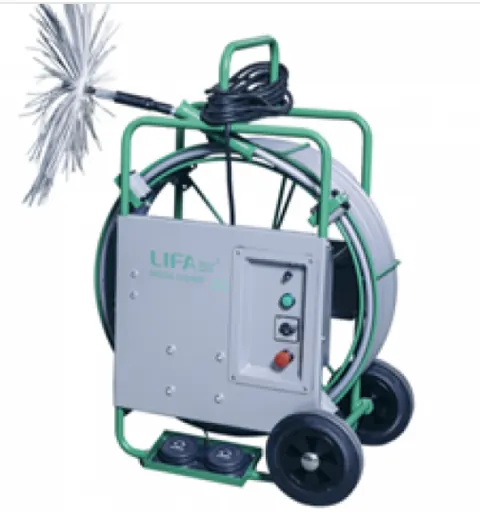
- Clean mechanically, for example with a rotating brush on the Electric duct brushing machine (ducts of 100 to 600 mm, reach up to 30 metres).
- Check difficult sections and bends with an compressed air duct cleaning, suitable for ducts from 30 mm.
- Take new images afterwards and summarise everything in a report with date, location and findings.
If you offer this as a fixed annual round, it becomes a recurring appointment for your client instead of a one-off job. More about setting up air duct cleaning as a service can be found on the page for cleaning contractors. An overview of machines, brushes and extraction is available under duct cleaning kit. Lamers Reinigingstechniek in Zelhem supplies that equipment; you can duct cleaning advice to decide which combination suits the ducts you clean.
How to decide for yourself whether cleaning is needed (without a statutory interval)
Without a fixed statutory interval, you have to make a well founded choice yourself. Use these four questions:
- What does your policy say? Search the prevention conditions for extraction, ducts and inspection.
- What do you see during inspection? KHN points out that serious contamination is often not visible to the naked eye. Camera footage gives certainty.
- What risk do you run? Grease in a kitchen duct is a fire risk; dust in an office duct mainly affects air quality.
- Can you prove it? Keep reports and photographs, so that you have evidence immediately when the insurer or an inspector asks.
Fictional example: a facility manager of an office building with a staff restaurant sees an annual inspection requirement for the kitchen extraction in the policy and no requirement for the office ventilation. So he schedules the kitchen annually and has the office ducts assessed on the basis of inspection. The same reasoning works for any mixed use building: split the installation into parts, link each part to the source that applies to it, and record the decision in writing. More background is available in the guides on ductwork cleaning.
Air duct cleaning equipment from Lamers at a glance
 DC4 duct cleaning machineDC4: electric, up to 30 m, ducts from 100 to 600 mm
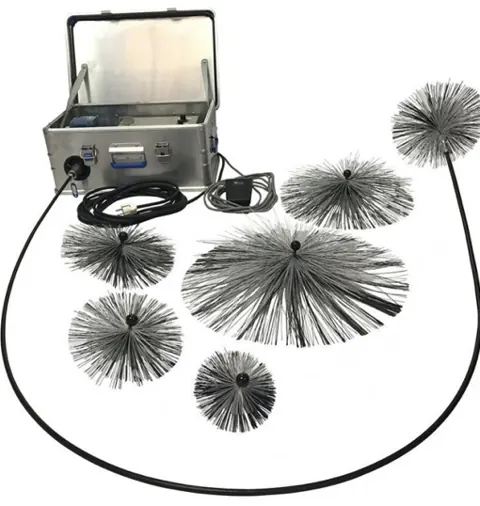
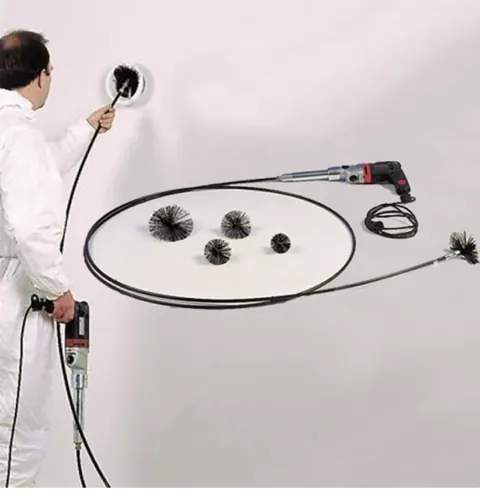 PD4 duct cleanerPD4: runs on a power drill, shaft 2.5 to 7.5 m
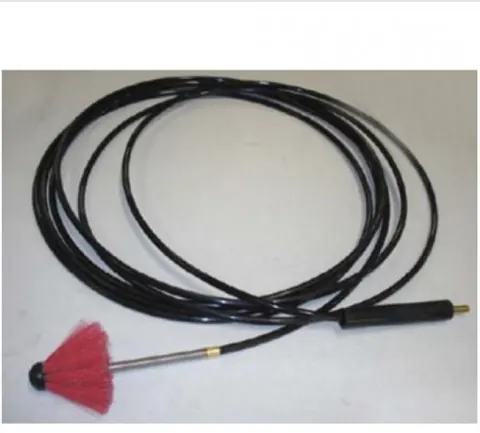 PD2 duct cleanerPD2: compact duct cleaner, specifications via Lamers
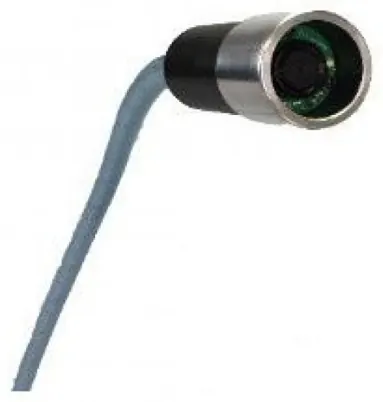 Intelligent AirnozzleCompressed air with camera, ducts from 30 mm
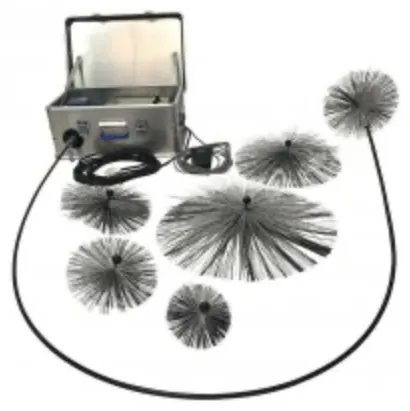 Duct cleaning brushesBrushes and shafts: soft, standard or Tynex
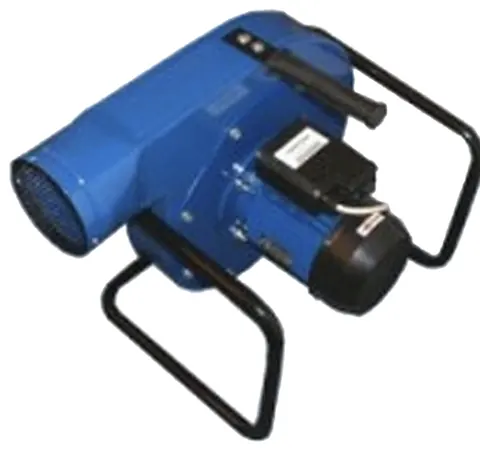 Duct sealing and extractionDuct balloons, diffuser caps and extraction
Frequently asked questions: is duct cleaning mandatory
Is air duct cleaning compulsory under the Dutch Working Conditions Decree (Arbobesluit)?
Not with a fixed interval. Article 6.2 of the Working Conditions Decree requires sufficient uncontaminated air at the workplace and a ventilation installation that is always in working order. The words maintenance and cleaning do not appear in it. Cleaning therefore follows indirectly: with heavily contaminated ducts it is hard to meet the requirement of clean air and a properly working installation.
Does the Dutch Bbl contain a cleaning duty for ventilation ducts?
No, not explicitly. The Building Works Living Environment Decree (Bbl) requires a ventilation provision in almost every existing building and a duty of care to prevent fire (art. 6.4). A duty to clean ducts at a set frequency is not included. The requirement to keep a building in good condition so that it continues to perform its function does touch on maintenance.
Has the Bbl replaced the old Dutch Building Decree for ventilation requirements?
Yes. Since 2024 the Building Works Living Environment Decree (Bbl) applies instead of the Building Decree (Bouwbesluit). Claims that the Building Decree requires maintenance of extraction are therefore outdated and not demonstrable either. For existing buildings, the ventilation requirements are now in art. 3.67 to 3.73 Bbl, and the fire safety duty of care in art. 6.4 Bbl.
Does my fire insurer require annual cleaning of the restaurant kitchen extract duct?
In hospitality, often yes. The prevention conditions of Goudse and De Zeeuwse require the exhaust duct and extraction motor to be inspected at least once a year and cleaned where needed by a specialist or the supplier. After a claim you must show proof. Always read your own policy, because conditions differ per insurer and per type of business.
Is a cleaning contract enough proof for the insurer of a hospitality kitchen extraction system?
According to KHN (Royal Dutch Hospitality Association), no. Only showing a contract is not enough. You must demonstrate that the duct has really been cleaned, with a report, photographs and a certificate. Keep these documents for every cleaning round, so that you can present them immediately when the insurer or an inspector asks for them.
Can an insurer or client oblige me to clean ducts through EN 15780:2025?
Only through a contract or policy. EN 15780:2025 is a European standard that replaces the 2011 version, not a Dutch law. A standard only becomes binding when a law, permit or contract refers to it. It is, however, the leading standard for assessing cleanliness, the need for cleaning and reporting. Referring to EN 15780 in your report strengthens your proof towards insurer and client.
Must an office building in the Netherlands have its air ducts cleaned every 4 to 8 years?
No primary source was found for that. The interval of 4 to 8 years is mentioned online, but it is not in the law and cannot be traced to a public standard text. Other sources mention a different interval without substantiation. Let the condition of the ducts determine when cleaning is needed, based on inspection and the requirements in your policy.
Does the Belgian rule on air duct cleaning also apply to Dutch companies?
No. Reports about new legislation that makes air duct cleaning compulsory concern Belgium, based on the Royal Decree on Workplaces. Those rules do not apply in the Netherlands. Here the Working Conditions Decree, the Working Conditions Act and the Bbl apply, and they mention no cleaning frequency. So always check which country a source comes from.
What can a cleaning contractor offer clients now that duct cleaning is not a legal requirement?
Certainty. A fixed annual round with a report full of photographs and findings helps the client show that they meet their duty of care and policy conditions. For hospitality, this matches the annual inspection requirement of insurers. With camera inspection before and after, you make the result visible, even for contamination that cannot be seen with the naked eye.
Is this overview of Dutch duct cleaning obligations legal advice?
No. This page gives a factual overview of law, standard and policy conditions as checked on 6 October 2026. It is not legal advice and does not replace an assessment of your situation. Put any doubts to your insurer, occupational health service or lawyer, and always read your own policy conditions and contracts carefully.
Sources and reference date
All facts on this page were checked on 6 October 2026.
- Working Conditions Decree article 6.2 (inview.nl, in Dutch)
- Working Conditions Act article 3 (inview.nl, in Dutch)
- Arboportaal: ventilation (in Dutch)
- IPLO: ventilation in existing buildings, Bbl (in Dutch)
- Bbl article 6.4 duty of care for fire safety (inview.nl, in Dutch)
- KHN: am I required to clean the exhaust duct? (in Dutch)
- De Zeeuwse: prevention conditions for hospitality premises (in Dutch)
- Goudse: prevention conditions for hospitality premises (in Dutch)
Editorial team: Lamers Reinigingstechniek B.V., supplier of professional air duct cleaning equipment in Zelhem, the Netherlands. Updated on . See also about Lamers Reinigingstechniek for cleaning contractors.
Request a quote or advice from Lamers

René Hendriksen, Sales Account Manager at Lamers, advises you on the machine, brushes and extraction for your jobs.
Briefly tell us what you clean (duct type, diameter, length, contamination and sector). Lamers will contact you with advice and a tailored quote.
Prefer direct contact? Call +31 (0)314 623 341, message us on WhatsApp 06-38048347 or email info@lamersequipment.nl.
Prefer a quick call first? Lamers will call you back

Leave your number. René Hendriksen or a colleague from Lamers will call you back to discuss duct type, diameter and the right equipment.
Or send us a message right away: WhatsApp 06-38048347